

Why Use Specialty Cocktail Glasses for Better Drinks
Most people assume specialty cocktail glasses are about appearances. They look elegant on a shelf, they photograph well, and they signal something about the person who owns them. All of that is true. But the real reason to use specialty cocktail glasses goes much deeper than aesthetics. The shape of the glass you pour into directly affects how a drink smells, tastes, and holds its temperature from the first sip to the last. Once you understand that, choosing glassware stops being a style decision and starts being a craft decision.
Table of Contents
- Key takeaways
- Why use specialty cocktail glasses for aroma and flavor
- Temperature control through glass design
- Practical service and handling advantages
- Popular specialty glass types and their best uses
- How presentation shapes the drinking experience
- My take on why the right glass is non-negotiable
- Upgrade your home bar with Thegildedcup
- FAQ
Key takeaways
| Point | Details |
|---|---|
| Glass shape changes flavor | The width and curve of a glass bowl directly influences how aromas reach your nose. |
| Stems protect temperature | Stemmed glasses keep drinks cold 2-3 minutes longer by reducing heat transfer from your hand. |
| Stability matters in service | Coupes and Nick & Nora glasses spill less than V-shaped martini glasses due to their wider base. |
| Matching glass to drink matters | Different cocktail glass types are engineered for specific drinks, not interchangeable. |
| Presentation shapes perception | Elegant glassware raises the perceived quality of a drink before a single sip is taken. |
Why use specialty cocktail glasses for aroma and flavor
Glassware is a form of engineering, not decoration. The dimensions of a glass, specifically the width of the opening and the curvature of the bowl, determine how volatile aromatic compounds behave the moment a drink is poured.
A wide-mouthed glass like a rocks glass lets aromas disperse quickly into the air around you. That works for whiskey sipped slowly at room temperature, where gradual oxidation opens the spirit up. But for a spirit-forward stirred cocktail like a Martini or a Negroni variation, that same wide opening is a liability. The aromatics you paid for in that bottle of vermouth or aged gin scatter before they reach your nose.
The inward-curving bowl of a Nick & Nora glass solves this problem directly. Concentrated aromatics at the rim deliver a more controlled, intentional scent experience with every sip. You are not just tasting the cocktail. You are smelling it first, which accounts for the majority of what your brain registers as “flavor.”
Here is what glass shape does to aromatic delivery:
- Wide openings scatter volatile compounds rapidly, softening the nose of a drink and making it seem lighter or less complex.
- Inward-curving bowls trap aromatic compounds just above the liquid, concentrating what reaches your nose.
- Tall, narrow vessels like flutes direct aroma in a tight column upward, ideal for sparkling drinks where carbonation carries scent.
- Shallow coupes spread aroma across a broader surface, giving a more diffuse, layered nose suited to citrus-forward cocktails.
Pro Tip: Store specialty glasses upright rather than inverted. Inverted storage traps stale air inside the bowl, which dulls the first aromatic impression of any cocktail you pour.
The Nick & Nora glass also preserves cocktail balance from first sip to last by limiting volume and surface area. A smaller bowl means less exposure to air and less temperature drift, so the drink tastes the same at the bottom as it did at the top.
Temperature control through glass design
The glass you use is the single biggest factor in how long your cocktail stays at the right temperature, aside from ice itself. Most people think about ice quantity and forget entirely about the vessel holding it.
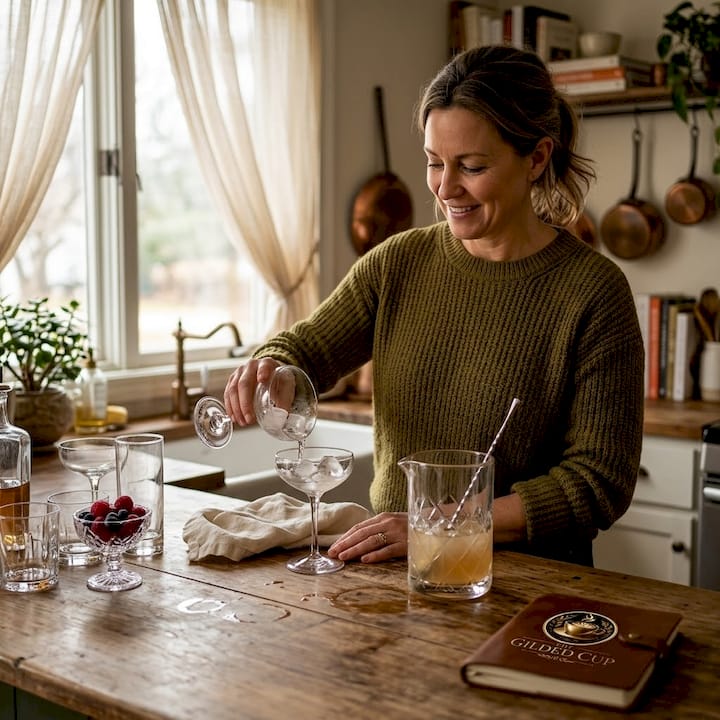
Stemmed glasses keep drinks cold measurably longer than their stemless counterparts. The stem creates physical separation between your warm hand and the chilled bowl. Research shows this gap keeps a drink cold 2-3 minutes longer than holding a room-temperature glass directly. Over a 10-minute cocktail, that difference is significant.
Glass thickness and volume also matter. A thicker glass wall holds ambient temperature longer, acting as mild insulation. A smaller volume bowl cools faster when pre-chilled and loses temperature more slowly because there is simply less liquid exposed to warm air.
Compare how common specialty glass types handle temperature:
- Nick & Nora glasses (typically 4-5 oz) keep stirred cocktails colder longer due to limited surface area and smaller volume.
- Flute glasses preserve the chill of sparkling cocktails and slow carbonation loss because the narrow opening reduces liquid surface exposure.
- Coupe glasses offer moderate temperature retention but have more surface area than a Nick & Nora, so they warm slightly faster.
- Rocks glasses are built for drinks served over ice, where the ice itself handles temperature. The thick base and wide bowl accommodate large cubes or spheres that melt slowly.
Pre-chilling a glass amplifies all of these advantages. The same glass performs differently when cold from the start. A chilled coupe or Nick & Nora slows temperature drift by a significant margin compared to a glass pulled from a dry shelf.
Pro Tip: Fill your glasses with ice water for 60 to 90 seconds before you pour. Dump the ice, dry the rim, and pour immediately. You will notice the cocktail stays cleaner and colder through the entire drink.
Practical service and handling advantages
Beyond taste and temperature, specialty glassware also makes the physical act of serving drinks easier and safer. This is where glass geometry supports workflow in ways most home bartenders never think about until they have knocked over a Martini glass.
The classic V-shaped Martini glass is the most visually dramatic vessel on the bar. It is also the most problematic to carry. The wide, shallow bowl and narrow stem make it inherently unstable, especially when full. One small jostle and you lose a third of the drink.
Here is how to think about service characteristics when choosing between popular specialty options:
- Evaluate base width against bowl volume. A wider base relative to the bowl keeps the center of gravity low. Coupes and Nick & Nora glasses both have this advantage over the inverted-V shape of a classic Martini glass.
- Check how the bowl interacts with ice. A rocks glass is designed to hold large ice formats. A flute is not. Pouring a drink over crushed ice in a flute traps small pieces at the bottom, creates uneven dilution, and makes the drink harder to sip.
- Consider the pour-to-rim space. Coupes and Nick & Noras are more stable and less prone to spilling because the inward curve of the bowl naturally contains the liquid when the glass tilts slightly.
- Think about grip and hand size. A delicate flute stem requires a lighter grip. Rocks glasses are far more forgiving and suit casual settings where drinks are passed hand-to-hand.
Pro Tip: When buying glasses for a home bar you actually entertain with, prioritize coupe glasses over classic Martini glasses. You get the same visual elegance without the spill risk, and they work beautifully for everything from a Daiquiri to a Sidecar.
Popular specialty glass types and their best uses
Knowing the benefits of specialty glasses is one thing. Knowing which glass to reach for is the practical payoff. Here is a working reference for the most useful cocktail glass types for home bars.
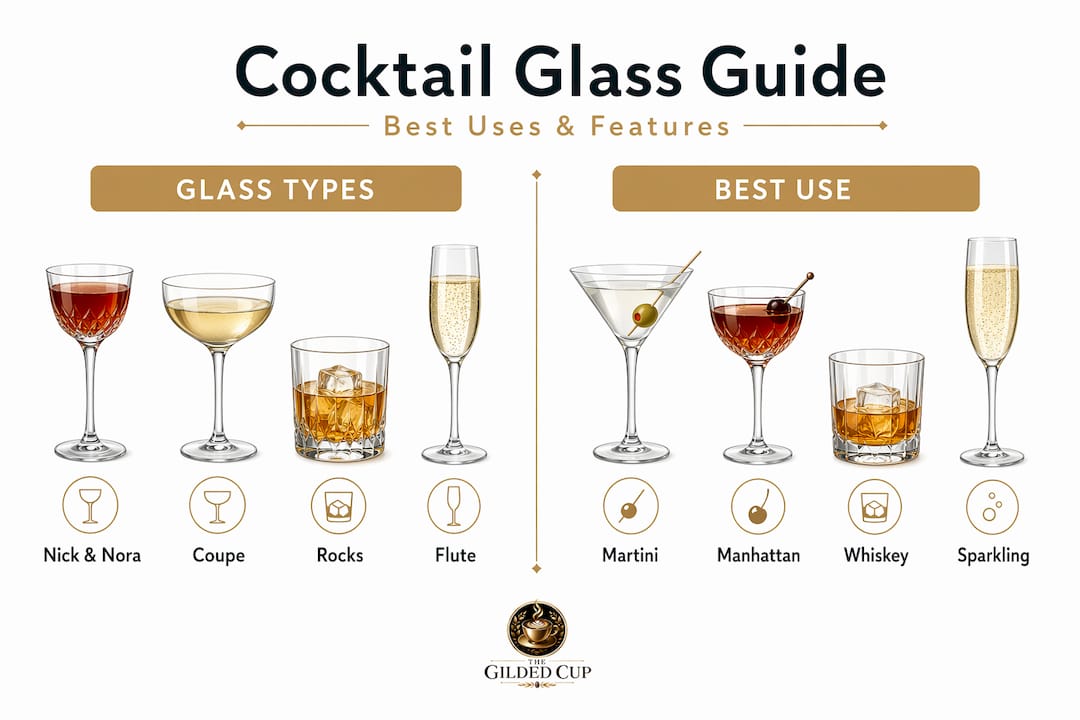
| Glass type | Best for | Key feature |
|---|---|---|
| Nick & Nora | Martinis, Gibsons, Manhattans | Concentrated aroma, spill-resistant bowl |
| Coupe | Daiquiris, Sidecars, sparkling cocktails | Elegant, stable, versatile |
| Classic Martini | Martinis, cosmopolitans | Visual drama, maximum surface area |
| Flute | Champagne cocktails, French 75 | Preserves carbonation, directs aroma |
| Rocks (Old Fashioned) | Old Fashioneds, Negronis, whiskey pours | Holds large ice, sturdy and flexible |
| Copper mug | Moscow Mule, Dark and Stormy | Keeps drinks cold, distinctive presentation |
A few notes on smart choices for home bars specifically. The Nick & Nora and coupe are the two most versatile specialty glasses you can own. Between them, they cover virtually every spirit-forward and citrus-based cocktail on a standard cocktail menu. If you are building a collection from scratch, start there.
Copper mugs deserve a mention beyond aesthetics. Copper conducts cold exceptionally well, which means a pre-chilled copper mug keeps a Moscow Mule colder than almost any glass alternative. The presentation is also distinctive in a way that signals intention to your guests.
For sparkling cocktails, flutes slow carbonation loss better than coupe glasses due to the narrow opening. If you regularly make French 75s or Champagne cocktails, a set of good flutes is worth having alongside your coupes.
The most important pairing principle: match the glass to the serving temperature and format of the drink, not just the name of the recipe. A Negroni served over a large ice cube belongs in a rocks glass. The same Negroni served up, without ice, belongs in a Nick & Nora or coupe.
How presentation shapes the drinking experience
Drink presentation is not vanity. It is psychology. Research consistently shows that people rate the same drink as more enjoyable when it is presented in elegant, purpose-built glassware. The importance of cocktail presentation starts before the glass touches the table.
- The color of a cocktail reads differently against a clear crystal bowl versus a colored interior vessel.
- Garnishes like expressed citrus peels or decorative ice look intentional in a coupe or Nick & Nora, and accidental in a mismatched tumbler.
- The weight and feel of quality glassware signals craft to your guest before they taste anything.
When you invest in quality home barware, you are not just upgrading your shelf. You are changing the full sensory experience of every drink you make.
My take on why the right glass is non-negotiable
I have watched home bartenders spend $60 on a bottle of Japanese whisky and pour it into a coffee mug. I have seen people muddle fresh herbs, squeeze citrus to order, and shake with precision, then serve the result in a generic pint glass. The work deserves better.
In my experience, the single fastest way to improve your home cocktail program is not a new spirit or a new technique. It is the right glass. When I switched from using whatever was clean to matching each cocktail to a specific vessel, my drinks tasted more cohesive. Not because anything in the recipe changed, but because the glass completed the circuit.
What I have learned is that the misconception runs deep. Most people think specialty glassware is for professionals or collectors. They see a coupe or a Nick & Nora and think “that’s for a fancy bar.” But choosing the right glass is really just respecting the drink you made. It holds the temperature you worked for. It concentrates the aroma you paid for. It keeps the cocktail balanced from the first sip to the last.
The practical lesson I keep coming back to: you do not need a glass for every occasion. You need four or five glasses that each do something specific extremely well. Start with a rocks glass, a coupe or Nick & Nora, and a flute. That trio covers 90% of what a home bar produces. Build from there once you know what you actually make most.
— Sharbel
Upgrade your home bar with Thegildedcup
If this article changed how you think about glassware, you are ready to shop with intention rather than habit. Thegildedcup carries a curated selection of specialty drinkware designed for people who take their cocktails seriously.
For something that steps outside traditional crystal stemware, the enamel mug collection offers genuine cold retention and an aesthetic that stands out on any bar cart. If you want a piece that surprises guests with a pop of color at the first pour, the colorful interior mugs are a conversation-starter that also serve a functional purpose. Browse the full specialty glassware range at Thegildedcup and find the glasses that match how you actually drink.
FAQ
Why does glass shape affect how a cocktail tastes?
Glass shape controls how aromatic compounds reach your nose, and aroma accounts for most of what you perceive as flavor. An inward-curving bowl concentrates volatile compounds at the rim, while a wide opening disperses them into the air.
What is the best glass for a home bartender to start with?
A coupe or Nick & Nora glass covers the widest range of cocktails and offers better stability and aroma control than a classic Martini glass. Most cocktail professionals recommend starting there.
Do stemmed glasses really keep drinks colder?
Yes. Stemmed glasses reduce heat transfer from your hand to the bowl, keeping a chilled cocktail cold measurably longer. The effect is amplified when you pre-chill the glass before pouring.
Are Nick & Nora glasses better than coupe glasses?
For spirit-forward cocktails, the Nick & Nora glass is generally the better choice because its smaller volume and inward-curving bowl better control aroma and temperature drift. Coupe glasses are more versatile for citrus-forward and sparkling drinks.
Can the wrong glass ruin a good cocktail?
It will not ruin it, but it will underperform it. A cocktail served in the wrong glass loses temperature faster, scatters aromas before they reach your nose, and can feel physically awkward to drink. The recipe stays the same. The experience changes.