

What is tumbler glass: a collector's guide
The term “tumbler glass” gets tossed around loosely, and that imprecision costs casual buyers. For collectors, though, the tumbler represents something far more specific and far more interesting. A tumbler glass is a flat-floored) beverage container, stemless and handle-free, that has quietly shaped drinking culture across centuries. While most people associate it with everyday use, the tumbler’s design history, material range, and stylistic variations make it one of the most rewarding categories in luxury drinkware. This guide cuts through the noise and gives you the full picture.
Table of Contents
- What defines a tumbler glass? Understanding its classic features
- The variety within tumblers: styles, sizes, and their uses
- Clarifying common confusions: tumbler glass versus travel tumblers
- Selecting and caring for high-end tumbler glasses
- Elevating your drink experience: using tumblers like a connoisseur
- Why collectors should rethink the humble tumbler glass
- Discover exquisite tumblers and luxury drinkware at The Gilded Cup
- Frequently asked questions
Key Takeaways
| Point | Details |
|---|---|
| Definition | A tumbler glass is a stemless, handle-free flat-bottomed glass used for serving various beverages. |
| Variety | Tumblers come in different sizes and shapes tailored to specific drinks like whiskey or cocktails. |
| Collector focus | Affluent collectors value tumblers for their elegant simplicity and sensory drinking experience. |
| Care tips | Proper hand washing and upright storage prolong the life and clarity of luxury tumblers. |
| Distinction | Traditional tumbler glasses differ from insulated travel tumblers in purpose and design. |
What defines a tumbler glass? Understanding its classic features
The tumbler glass definition is deceptively simple. A tumbler is a flat-bottomed drinking glass with no handle, no foot, and no stem. That three-part absence is the entire classification. No other vessel type in glassware is defined so cleanly by what it lacks, and that restraint is precisely what gives the tumbler its design power.
The stemless, handle-free silhouette is not just a stylistic choice. It creates a direct physical relationship between the drinker and the glass. You hold it in your palm, feel its weight, sense the temperature of the liquid inside. That tactile intimacy is something a stemmed wine glass, for all its elegance, cannot offer.
Key physical characteristics that define a tumbler glass include:
- No stem or foot: The glass sits directly on its base with no elevation.
- Flat bottom: Provides stability and a clean visual line.
- No handle: The entire vessel is gripped by hand.
- Variable height: From squat rocks glasses to tall highballs, height varies significantly by type.
- Thicker base: Many high-end tumblers feature a weighted bottom for stability and visual heft.
The thicker bottom deserves special attention. In luxury glassware, that added weight at the base is not accidental. It shifts the center of gravity downward, making the glass harder to tip, and it creates a satisfying solidity when you set it on a table. For collectors, the weight and balance of a tumbler are as important as its visual clarity.
Material matters enormously in this category. While plastic and stainless steel versions exist in the broader market, lead-free crystal and hand-blown glass remain the gold standard for collectors. Crystal offers superior clarity, a faint resonance when tapped, and a brilliance that catches light in ways standard glass cannot match. When you are building a serious collection, material is where the conversation starts.
The variety within tumblers: styles, sizes, and their uses
With the foundational definition established, the real richness of the tumbler category comes into focus. The modern tumbler comes in various sizes) and shapes, each engineered for a specific drinking experience. This is not arbitrary. Shape affects how aromas concentrate, how ice sits, and how a cocktail looks in the glass.
The most significant tumbler types every collector should know:
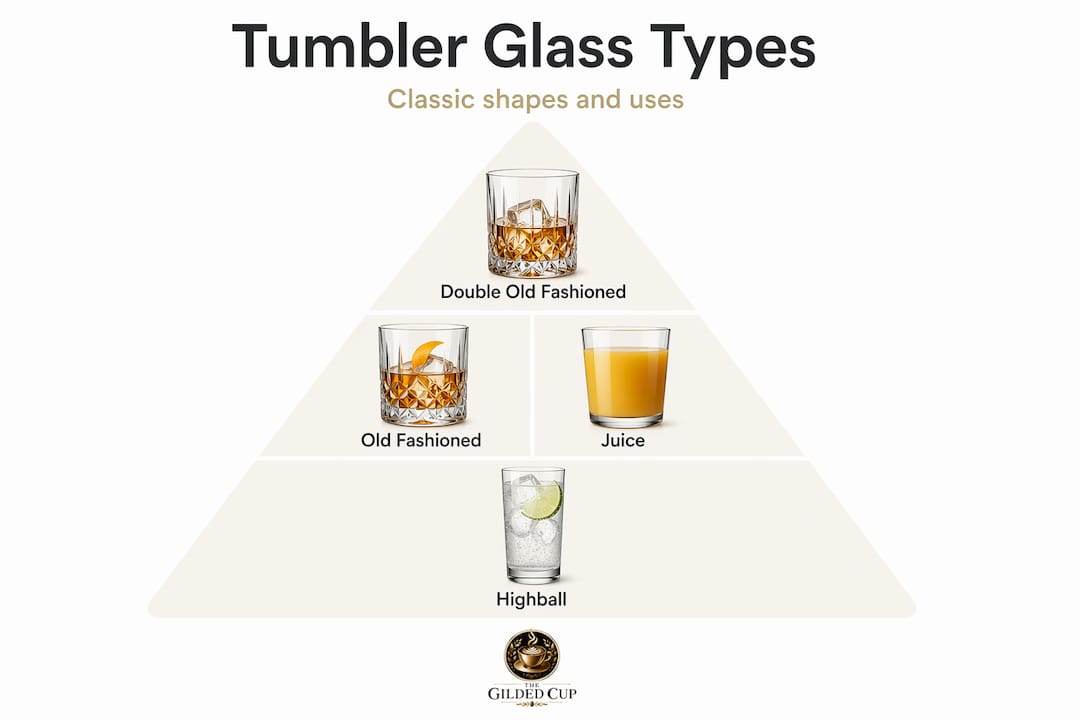
- Old fashioned (rocks glass): The shortest and widest tumbler, typically holding 6 to 10 ounces. Designed for spirits served neat or over a single large ice cube. The wide mouth allows aromas to open freely.
- Double old fashioned: A taller version of the rocks glass, holding 12 to 16 ounces. Ideal for cocktails with more mixers or larger ice formats like spheres.
- Highball glass: Taller and narrower, holding 10 to 16 ounces. Built for long drinks like a whiskey soda or a Tom Collins where carbonation and volume matter.
- Collins glass: Even taller than a highball, sometimes reaching 14 to 16 ounces. The narrow profile preserves carbonation longer.
- Juice glass: A compact tumbler, typically 6 to 8 ounces, used for small servings of juice, espresso drinks, or amaro.
| Tumbler type | Typical volume | Shape profile | Best pairings |
|---|---|---|---|
| Old fashioned | 6 to 10 oz | Short, wide | Neat whiskey, Old Fashioned cocktail |
| Double old fashioned | 12 to 16 oz | Medium, wide | Negroni, whiskey on the rocks |
| Highball | 10 to 16 oz | Tall, narrow | Whiskey soda, mojito, gin and tonic |
| Collins | 14 to 16 oz | Very tall, narrow | Tom Collins, Paloma, sparkling water |
| Juice glass | 6 to 8 oz | Short, straight | Fresh juice, amaro, espresso tonic |
Understanding these distinctions changes how you shop and how you drink. A serious home bar does not use one tumbler for everything. Each style is a specific tool, and selecting the right one elevates both the drink and the ritual around it.
Clarifying common confusions: tumbler glass versus travel tumblers
To refine your understanding, it is essential to distinguish between similar terms often used interchangeably in retail. This confusion trips up even experienced buyers, and it matters more than most people realize.
A tumbler in glassware taxonomy is a traditional drinking vessel, typically glass or crystal, designed for indoor use. A travel tumbler is an entirely different product category: insulated, often stainless steel or plastic, fitted with a lid, and built for temperature retention on the go. The two share a name but almost nothing else.
Here is how they differ in practice:
- Traditional tumbler glass: Glass or crystal, no insulation, no lid, flat bottom, designed for the table.
- Travel tumbler: Insulated walls, screw-on or snap lid, often double-walled stainless steel, designed for portability.
- Sensory experience: A glass tumbler lets you see, smell, and feel your drink fully. A travel tumbler prioritizes function over sensory engagement.
- Collector value: Traditional glass tumblers appreciate in value, carry maker’s marks, and exist within a design lineage. Travel tumblers do not.
Pro Tip: When shopping for luxury barware, always filter by material first. If a product listing says “tumbler” but does not specify glass or crystal, you are likely looking at a travel or utility product. The material tells you everything about the category you are actually in.
The retail conflation of these two categories is a real problem for collectors. A well-meaning gift-giver searching for a luxury tumbler can easily land on an insulated travel cup if they do not know what to look for. Knowing the distinction protects your collection and your budget.
Selecting and caring for high-end tumbler glasses
Now that you know what to look for, the next step is knowing how to choose well and protect what you buy. Not all glass tumblers are created equal, and the differences between a mass-market piece and a collector-grade tumbler are immediately apparent when you hold them side by side.
Glass tumblers with thick bottoms are harder to tip and perform better aesthetically, but the quality of the glass itself matters just as much as the shape. When evaluating a tumbler for your collection, consider:
- Clarity: Hold the glass up to light. Premium crystal should show zero distortion or bubbles.
- Weight distribution: The base should feel heavier than the walls, not uniformly thick throughout.
- Rim finish: A fine-cut or polished rim signals hand-finishing. Machine-made rims often feel slightly rough.
- Resonance: Tap the glass gently. Crystal rings with a sustained tone. Standard glass gives a flat, short sound.
- Maker’s mark: Signed or marked pieces from recognized glassmakers carry provenance and long-term value.
Caring for your tumblers is equally important. Luxury glass is not fragile, but it is unforgiving of careless habits.
- Hand-wash with warm water and a mild, non-abrasive detergent.
- Avoid dishwashers entirely for crystal. The heat and harsh detergents cause microscopic etching that clouds the glass over time.
- Dry immediately with a lint-free cloth to prevent water spots.
- Store upright, never stacked or inverted on a rough surface, to protect the rim.
Pro Tip: A small amount of white vinegar in the rinse water removes mineral deposits without damaging the glass surface. It is the single best maintenance habit for keeping crystal tumblers brilliant over years of use.
Elevating your drink experience: using tumblers like a connoisseur
Building on care and selection, here is how to use your tumblers to maximize your drink enjoyment and impress guests. The glass you choose for a drink is not decoration. It is a functional decision that shapes the entire experience.
- Match the glass to the spirit. A neat pour of aged Scotch belongs in an old fashioned glass where the wide opening lets the whiskey breathe and the aromas rise. A highball is for mixed drinks where volume and carbonation need room.
- Consider your ice format. A double old fashioned accommodates a large sphere or block, which melts slowly and dilutes minimally. A standard rocks glass is better suited to a single cube or a small cluster.
- Chill the glass before pouring. Place your tumbler in the freezer for five minutes before serving. The cold glass keeps the drink cooler longer without adding ice that dilutes flavor.
- Use the glass as a presentation tool. Glass tumblers used for Old Fashioned cocktails showcase the drink’s color and garnish in a way no opaque vessel can match. The visual component is part of the ritual.
- Pair garnish height to glass height. A tall sprig of rosemary or a long citrus peel looks proportional in a highball but overwhelms a rocks glass. Visual balance matters.
| Tumbler type | Best drink | Why it works |
|---|---|---|
| Old fashioned | Neat whiskey, Negroni | Wide mouth opens aromas, low profile suits spirit-forward drinks |
| Double old fashioned | Old Fashioned cocktail, Mezcal Mule | Accommodates large ice formats, enough volume for muddled ingredients |
| Highball | Whiskey soda, gin and tonic | Tall profile preserves carbonation, room for generous garnish |
| Collins | Tom Collins, Paloma | Narrow shape keeps bubbles active longer, elegant visual line |
| Juice glass | Fresh juice, amaro, espresso tonic | Small volume concentrates flavor, ideal for short pours |
Shape affects aroma concentration in ways most drinkers never consider. A narrower opening funnels volatile compounds toward your nose before the glass reaches your lips. A wider opening disperses those same compounds into the room. Choosing the right tumbler is, in part, choosing how much of the drink you want to smell before you taste it.
Why collectors should rethink the humble tumbler glass
Here is the perspective most drinkware articles skip entirely: the tumbler is not the entry-level option in a serious collection. It is often the most demanding one to get right.
Ornate glassware, a hand-painted decanter or an etched crystal coupe, announces itself immediately. The craftsmanship is visible from across the room. A tumbler offers no such shortcut. Its beauty is entirely in its proportions, its weight, its clarity, and the way it feels in the hand. There is nowhere to hide mediocre glass in a tumbler. Every flaw is visible, every imbalance felt.
That is why the best tumblers in the world are genuinely hard to make. A perfectly weighted old fashioned glass with a fire-polished rim and optically clear walls requires the same level of craft as a stemmed piece. It simply does not advertise it.
The tactile dimension is also undervalued. When you hold a stemmed glass, you are deliberately kept at a distance from the liquid. The stem exists partly to prevent your body heat from warming the wine. A tumbler inverts that logic entirely. You are meant to hold it, warm it if you choose, feel the condensation on the outside. That directness is not a design flaw. It is the design.
For collectors building a home bar that reflects genuine taste rather than received wisdom, a curated set of tumblers, varied in type, sourced from serious makers, and chosen for balance and clarity, will outperform a cabinet full of elaborate stemware in daily use and long-term satisfaction. Versatility and beauty in the same object is a harder standard to meet than beauty alone.
Discover exquisite tumblers and luxury drinkware at The Gilded Cup
If this guide has sharpened your eye for what separates a fine tumbler from a forgettable one, the next step is finding pieces that meet that standard.
At The Gilded Cup, every piece in our collection is chosen for craftsmanship, material quality, and design integrity. Whether you are building a home bar from scratch or adding to an existing collection, our curated drinkware selection gives you options that hold up to serious scrutiny. Explore our whiskey barrel aged mug for a piece that bridges rustic character with refined form, or consider the mug with color inside for a bold, contemporary addition. For understated elegance, the black glossy mug delivers exactly the kind of quiet confidence a well-chosen tumbler should. Your collection deserves pieces that earn their place.
Frequently asked questions
What is the main difference between a tumbler glass and a travel tumbler?
A tumbler glass is a stemless, handle-free glass primarily for indoor drinking, while a travel tumbler is typically insulated with a lid for on-the-go use. The terminology overlaps in retail but the two products serve entirely different purposes and audiences.
Why do many tumblers have thick bottoms?
Thick bottoms make tumblers harder to tip and add aesthetic weight that enhances the drinking experience, a key quality marker in luxury glassware.
Are tumblers suitable for all types of drinks?
Yes. Tumblers come in various sizes) and shapes specifically designed to serve everything from water and fresh juice to complex cocktails and neat spirits.
How should I care for high-end tumbler glasses?
Hand-wash with gentle detergent, dry immediately with a lint-free cloth, and store upright. Proper washing and storage prevent the cloudiness and rim damage that degrade luxury glass over time.