

What Is Stopper Fitting: Types, Uses, and Applications
If you’ve encountered the term “what is stopper fitting” and walked away more confused than when you started, you’re not alone. The phrase covers at least three distinct product categories across industries: pipeline line stop fittings used in live pipe isolation, ground-glass stoppers used in laboratory glassware, and drain stopper fittings found in plumbing and hospitality settings. Each serves a sealing or isolation purpose, but the design, materials, and operating principles differ completely. This article lays out the stopper fitting definition for each context, explains how they work, and gives you the practical knowledge to choose the right one.
Table of Contents
- Key takeaways
- What is stopper fitting: the core definition
- Types of stopper fittings explained
- How stopper fittings work
- Stopper fitting applications and selection tips
- My take on what most people get wrong
- Explore stopper fittings at Thegildedcup
- FAQ
Key takeaways
| Point | Details |
|---|---|
| Context defines everything | “Stopper fitting” means different things in pipeline, lab, and plumbing contexts. |
| Pipeline stoppers allow live work | Line stop fittings let technicians isolate pressurized pipes without shutting down service. |
| Lab stoppers demand precision | Ground-glass stoppers require exact taper matching and clean surfaces to hold a leak-tight seal. |
| Plumbing has no universal size | Drain stopper compatibility depends on flange profile, stem length, and actuation method. |
| System compatibility matters | A stopper fitting alone is rarely enough; compatible hardware and correct sizing are required. |
What is stopper fitting: the core definition
The term “stopper fitting,” more formally called a line stop fitting, plug fitting, or joint stopper depending on the context, refers to any device engineered to close off, seal, or isolate an opening in a pipe, vessel, or drain. That shared purpose is where the similarities end.
In the pipeline world, a stopper fitting is a mechanical device inserted into a pressurized pipe through a previously made tap to create a temporary flow isolation. Pipeline stopper fittings are stainless steel and designed for working pressures up to 250 psi, allowing crews to halt flow in a live system without shutting down service to neighboring areas.
In laboratory glassware, a stopper is a ground-glass joint) inserted into the neck of a flask, bottle, or reaction vessel to create a hermetic seal against liquids and gases. These use standardized tapered joint profiles and come in glass, cork, and rubber variants.
In plumbing, especially in hotels and residential bathrooms, a stopper fitting is the mechanism inside a sink or bathtub drain that controls water retention. These come in multiple actuation styles and are surprisingly variable in sizing across manufacturers.
Here’s why clarifying the stopper fitting definition matters so much:
- Using the wrong stopper fitting in a pipeline application can result in catastrophic pressure failure.
- A mismatched lab stopper can compromise a vacuum seal, contaminate a reaction, or shatter glass.
- An incompatible drain stopper in a hospitality setting leads to constant maintenance calls and guest complaints.
Context defines the product) entirely. Knowing which version you need before you search or purchase saves time, money, and risk.
Types of stopper fittings explained
The landscape of stopper fitting types breaks down cleanly by industry. Understanding each category on its own terms prevents costly misidentification.
Pipeline line stop fittings
Pipeline stopper fittings are engineered for a demanding job: stopping flow inside a live, pressurized pipe. The main types include threaded, flanged, and mechanical configurations. Advanced variants like the SmartStop system simplify isolation with a single fitting without requiring additional taps or spacing between fittings. Bottom-out stoppers and drilling stoppers are used for specific bore sizes and pressure ranges.
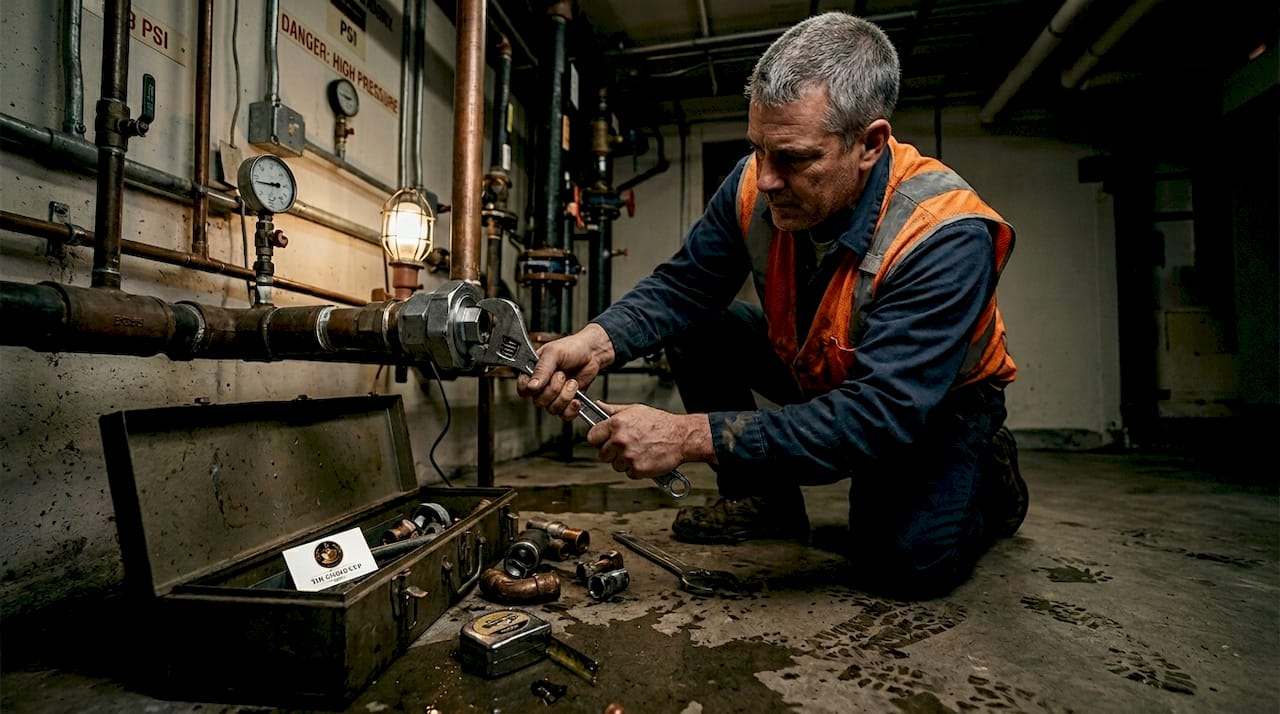
These fittings integrate with hot-tap tapping machines, meaning the stopper does not function alone. Coordination with tapping machines and sealing elements is mandatory for any live pipe stopping operation.
Laboratory ground-glass stoppers
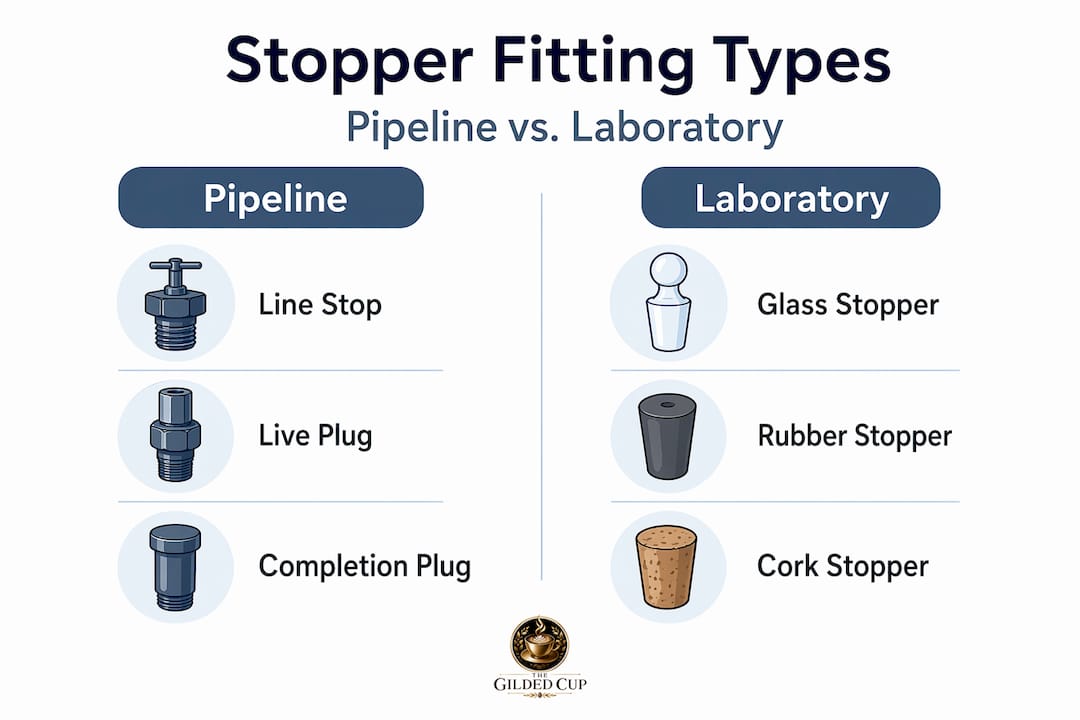
Lab stoppers use a standardized taper system, most commonly the NS (Normschliff) taper profile, to create a friction-fit seal. The stopper fits into a matching ground-glass joint on a flask or bottle. Glass, cork, and rubber stoppers each serve different purposes:
- Glass stoppers are chemically inert and preferred for storing aggressive solvents or acids.
- Cork stoppers are porous and suited for low-pressure, short-term sealing.
- Rubber stoppers provide flexibility and are useful when a tight seal is needed over irregular openings.
High-quality borosilicate glass and precision ground joints provide chemical and thermal resistance that makes glass stoppers the default choice in rigorous lab work.
Plumbing drain stopper fittings
Plumbing stoppers come in more variations than most people expect. Stopper actuation methods include lever-operated, push-pop, twist-lock, and magnetic types, each with different stem lengths, thread pitches, and flange profiles.
Here’s a comparison to make the differences concrete:
| Type | Material | Common use | Key feature |
|---|---|---|---|
| Threaded line stop | Stainless steel | Live pipe isolation | Up to 250 psi rated |
| Flanged line stop | Steel/ductile iron | Industrial pipelines | Bolted flange connection |
| Ground-glass stopper | Borosilicate glass | Lab flasks and bottles | Tapered NS joint sizing |
| Rubber stopper | Rubber/silicone | Lab vessels, irregular openings | Flexible, compressible seal |
| Pop-up drain stopper | Brass/plastic | Bathroom sinks | Lever-actuated lift rod |
| Twist-lock drain stopper | Brass | Hotel and residential basins | Manual twist engagement |
| Magnetic drain stopper | Stainless steel | Modern basin fixtures | No mechanical parts |
Pro Tip: When ordering a replacement plumbing stopper, measure the drain opening diameter, the distance from the drain to the overflow plate, and the existing actuation method before purchasing. These three measurements eliminate the guesswork and prevent return trips.
How stopper fittings work
The operating principles behind a stopper fitting depend entirely on the domain, but all share one goal: creating a reliable seal under real-world conditions.
Pipeline stopper fitting process
A live pipe stopping operation follows a specific sequence. Getting this sequence right is non-negotiable:
- A tapping machine creates a hot-tap entry point on the live pipe without interrupting service.
- The stopper fitting is inserted through the tapped opening into the pipe bore.
- The fitting expands or engages its sealing elements, including O-rings and gaskets, to isolate the flow.
- Double seals maintain safe pressure isolation during the downstream maintenance work.
- Once repairs are complete, the stopper fitting is retracted and a permanent completion plug is installed.
- The tapping machine is removed and the fitting is capped.
Buying a stopper fitting alone without the correct tapping machine and completion plug system will not allow a proper installation. The fitting is one component in a coordinated system.
Lab stopper fitting mechanics
A ground-glass stopper works through friction and surface contact. The tapered stopper is pressed into a matching tapered joint. When the taper angles match precisely, the surfaces mate and create a seal capable of holding vacuum or inert gas pressure. Taper discrepancies or residues compromise vacuum and inert gas seals even when the size number appears correct on paper.
Pro Tip: Before inserting a glass stopper into a joint, lightly grease the taper with high-vacuum grease if you are working under vacuum conditions. This fills any microscopic surface imperfections and dramatically improves seal integrity.
Plumbing stopper fitting mechanics
A drain stopper operates through its actuation mechanism. A pop-up stopper lifts and drops via a pivot rod connected to the lift rod behind the faucet. A twist-lock type engages by rotating the stopper cap against the drain seat. Compatibility with drain hardware and accurate sizing are critical. A stopper that sits too shallow leaks; one that sits too deep won’t seal the drain rim.
Stopper fitting applications and selection tips
Knowing how stopper fittings work is useful. Knowing how to apply that knowledge in your specific situation is what actually matters.
Pipeline stopper fittings make service continuity possible. Water utilities, gas distributors, and industrial facilities use them to repair or modify live mains without turning off service to entire neighborhoods or production lines. The innovations like the SmartStop system represent a meaningful advancement in minimizing downtime during critical infrastructure work.
In laboratory settings, stoppers appear on reaction flasks, distillation setups, Schlenk lines, and reagent storage bottles. For fine glassware used in decanting or serving, ground-glass stoppers serve a dual purpose: they seal the contents and contribute to the aesthetic elegance of the piece. A well-fitted glass stopper on a crystal decanter is not just functional. It is part of the design.
In hospitality, the challenge of standardization in hotel bathrooms is real. Differences in flange profile, stem length, thread pitch, and drain diameter mean that no single stopper fits every fixture. Procurement teams need to spec stoppers per fixture model, not per property.
Practical selection tips for stopper fitting applications:
- For pipeline use: Confirm pipe diameter, material, and pressure rating before specifying any line stop fitting. Always source the fitting and tapping machine from compatible product families.
- For lab glassware: Match the NS taper number exactly. Inspect the glass surface for chips or cloudiness before use. Clean joint surfaces before every use.
- For plumbing: Note the drain body manufacturer and model when possible. Measure the drain opening, stopper diameter, and lift rod length. Choose actuation type to match the existing faucet or drain hardware.
- For collectors and home bar use: Look for glassware with ground-glass stoppers where the stopper is precisely fitted at the factory. A loose stopper on a decanter allows oxidation and evaporation, which defeats its purpose.
Maintenance extends the life of every stopper fitting type. For glass stoppers, periodic cleaning and regreasing of the taper prevents the stopper from seizing inside the joint. For drain stoppers, checking the pivot rod mechanism annually prevents the stopper from failing to lift or drop fully.
My take on what most people get wrong
I’ve spent years looking at glassware, both in professional contexts and in the world of fine drinkware, and I’ve come to believe that the single most common mistake with stopper fittings across every context is treating “close enough” as good enough.
In lab glassware, I’ve seen researchers use a stopper that’s one size off because it seemed to stay in place. It held long enough to feel fine and then failed mid-experiment. In pipeline work, I’ve read incident reports where line stopping jobs were delayed or compromised because crews sourced the fitting without the matching tapping machine, not realizing the two are part of a system.
In fine glassware and home bar settings, the stopper fitting is often treated as decorative, but it actually determines whether a decanter holds its content securely over days or weeks. A stopper that fits poorly allows air exchange, which affects the quality of stored wine or spirits. When clients at Thegildedcup ask me whether the stopper on a decanter matters, my answer is always yes, and more than they think.
What I’ve learned is that precision in stopper fitting selection isn’t perfectionism. It’s just the minimum required for the fitting to do its job. Every context has its own version of “correct fit,” and finding that fit requires knowing what to measure and what to match.
— Sharbel
Explore stopper fittings at Thegildedcup

If you’re drawn to glassware where the stopper fitting is part of the craftsmanship and not an afterthought, Thegildedcup carries a curated selection of fine decanters and drinkware featuring precision-fitted ground-glass stoppers. Every piece is chosen with attention to both function and elegance, making them ideal for home bar enthusiasts, hospitality professionals, and collectors who understand the difference a well-fitted stopper makes. Whether you are replacing a stopper on a heritage decanter or building a new collection, Thegildedcup offers the quality and expertise to guide your selection. Visit Thegildedcup to browse current inventory and connect with the team for personalized recommendations.
FAQ
What is a stopper fitting used for?
A stopper fitting is used to seal or isolate an opening in a pipe, glassware vessel, or drain. The specific design and purpose vary depending on whether the application is industrial pipeline work, laboratory glassware, or plumbing.
How does a pipeline stopper fitting work?
A pipeline stopper fitting is inserted through a hot-tap entry point into a live pressurized pipe, then expanded to create a flow isolation. After repairs are complete, it is retracted and replaced with a permanent completion plug.
What types of stopper fittings exist for laboratory glassware?
Laboratory stopper fittings include ground-glass stoppers, cork stoppers, and rubber stoppers. Ground-glass types are the most precise, relying on matched tapered joints to create a hermetic seal for chemical storage or reactions.
Why doesn’t one sink stopper fit all drains?
There is no universal drain stopper size because manufacturers vary in flange profile, actuation method, stem length, thread pitch, and drain opening diameter. Measuring your specific drain before purchasing is the only reliable approach.
Do stopper fittings on decanters really matter?
Yes. A poorly fitted ground-glass stopper on a decanter allows air exchange, which accelerates oxidation in stored wine or spirits. A precision-fitted stopper maintains an airtight seal and preserves the contents over time.