

What Is Porcelain Drinkware? A Complete Guide
Porcelain drinkware is a type of ceramic made from kaolin clay, feldspar, and quartz, fired at temperatures between 1,200°C and 1,400°C to produce a dense, non-porous, glass-like body. The industry term for this result is vitrified porcelain. That vitrification process is what separates porcelain from ordinary ceramics. The fired body achieves water absorption of 0.5% or less, which makes it resistant to stains, odors, and bacteria. For home decor enthusiasts and everyday drinkers alike, that combination of beauty and hygiene is exactly why porcelain remains the gold standard for fine drinkware.
What is porcelain drinkware and what makes it different?
Porcelain drinkware is defined by its vitrified, non-porous body and its refined, often translucent appearance. Those two qualities come directly from its mineral composition and the extreme heat used to fire it.
The key functional benefits of porcelain drinkware include:
- Non-porous surface. The vitrified glass-like matrix resists stains, odors, and bacteria, making it the most hygienic ceramic option for daily drinking.
- Lightweight and thin walls. Porcelain is thinner and lighter than stoneware, which gives it an elegant feel in the hand.
- Neutral taste surface. The non-porous glaze does not absorb or transfer flavors, so your coffee or tea tastes exactly as intended.
- Natural, non-toxic material. Unlike plastic or metal, porcelain does not leach harmful substances into hot or cold drinks.
- Thermal shock resistance. The vitrified body handles sudden temperature changes better than earthenware or unglazed stoneware.
- Dishwasher and microwave compatibility. Most undecorated porcelain is safe for both, though pieces with metallic gilding require hand washing.
One underappreciated benefit is how rim thickness shapes your drinking experience. Thin rims accentuate acidity and floral notes in light coffees, while thicker rims soften the impact of bold, dark roasts. That is not a minor detail. It is the reason specialty coffee shops and fine tea houses invest specifically in thin-walled porcelain cups.
Pro Tip: Check the rim of any porcelain mug before buying. A rim under 3mm thick delivers a noticeably cleaner, sharper taste experience for pour-over coffee and delicate teas.
How is porcelain made? The vitrification process explained
Porcelain starts as a blend of three raw minerals: kaolin clay, feldspar, and quartz. Each plays a specific role. Kaolin provides plasticity and the white color. Feldspar acts as a flux, lowering the melting point of the mixture. Quartz adds structural strength and hardness.
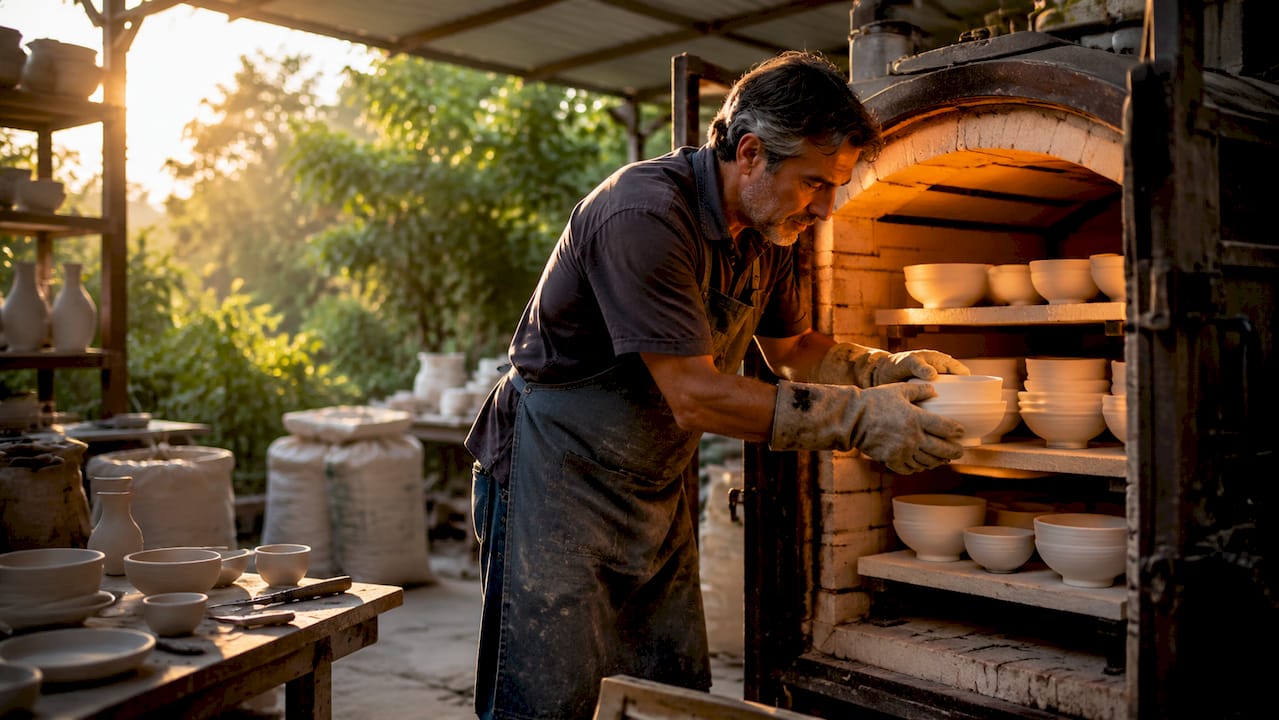
The shaped piece enters a kiln and fires at 1,260°C to 1,400°C. At those temperatures, the feldspar melts and fills the spaces between clay and quartz particles. The result is a dense, unified body with almost no open pores. That transformation is vitrification.
The industry standard for confirming vitrification is ASTM C373, a water absorption test. The three ceramic classifications are:
| Classification | Water Absorption | Common Examples |
|---|---|---|
| Vitreous (porcelain) | 0–0.5% | Fine dinnerware, espresso cups |
| Semi-vitreous (stoneware) | 2–3% | Everyday mugs, baking dishes |
| Non-vitreous (earthenware) | 8–12% | Terracotta pots, rustic tableware |
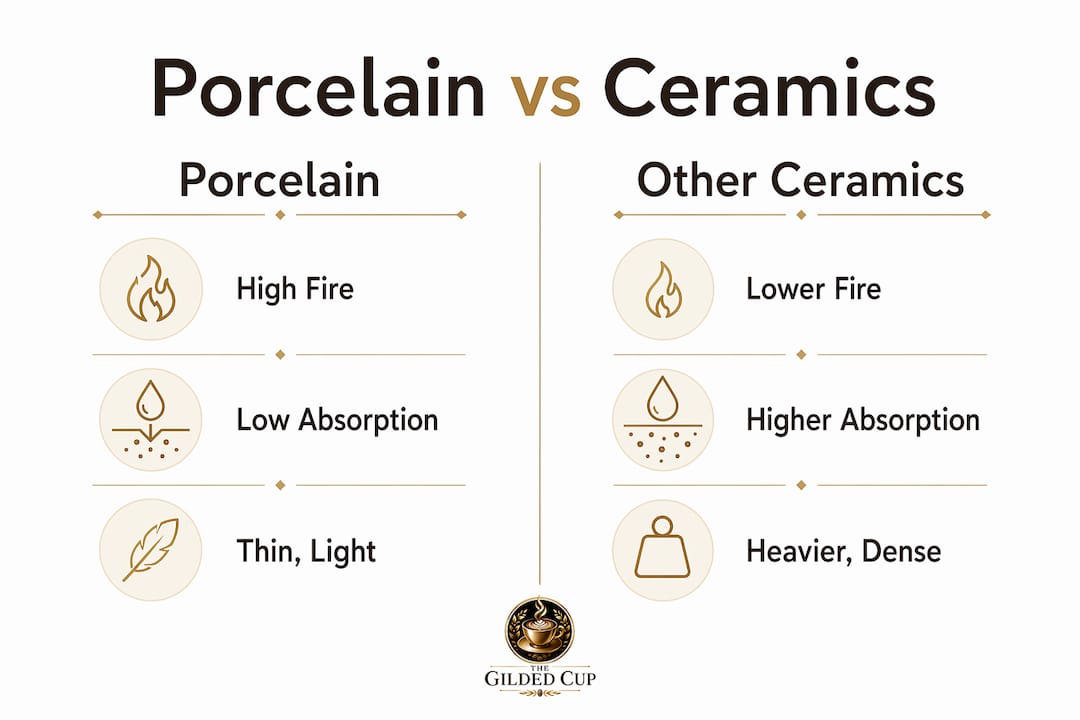
Earthenware absorbs up to 24 times more water than vitrified porcelain. That difference matters for hygiene, durability, and commercial use. Restaurants and hotels specify vitrified porcelain precisely because a non-porous body does not harbor bacteria or absorb cleaning chemicals. For a deeper look at what separates fine porcelain from standard ceramic, the fine porcelain characteristics guide at Thegildedcup covers the collector-level details.
Pro Tip: Hold a thin porcelain cup up to a light source. True vitrified porcelain shows a slight translucency. If the piece is completely opaque and heavy, it is likely stoneware or earthenware.
Porcelain vs ceramic drinkware: stoneware, earthenware, and bone china
The word “ceramic” is a category, not a material. Porcelain, stoneware, earthenware, and bone china are all ceramics. They differ in composition, firing temperature, and the properties that result.
| Material | Firing Temp | Water Absorption | Weight | Best Use |
|---|---|---|---|---|
| Porcelain | 1,260–1,400°C | 0–0.5% | Light | Formal dining, specialty coffee, tea |
| Stoneware | 1,200–1,300°C | 2–3% | Medium-heavy | Daily mugs, casual dining |
| Earthenware | 900–1,150°C | 8–12% | Heavy | Decorative, rustic tableware |
| Bone china | 1,200–1,300°C | 0–0.5% | Very light | Luxury formal dining, gifting |
Stoneware is denser and retains heat longer than porcelain. That makes it a better choice for long, slow sips of dark roast coffee or hot chocolate. Porcelain suits light, acidic coffees and delicate teas where flavor clarity matters most. The material choice between porcelain and stoneware depends directly on beverage type, not just personal preference.
Bone china deserves a separate mention. It is a porcelain variant that includes bone ash in its composition, which produces an ivory-white tone and a distinctive translucency. Bone china commands an 80–150% price premium over standard vitrified porcelain because of the cost of raw materials and the complexity of the firing process. For most home use, standard vitrified porcelain delivers equivalent hygiene and durability at a fraction of the cost. Bone china earns its place at formal tables and as a gift, where its visual luxury justifies the price.
Earthenware is the most fragile of the four. Its high water absorption means it must be glazed to hold liquids, and even then, chips in the glaze expose the porous body underneath. For drinkware, earthenware is best reserved for decorative or occasional use rather than daily service.
Porcelain drinkware types, care tips, and practical use
Porcelain drinkware covers a wide range of forms. The most common types include:
- Espresso cups (demitasse). Small, thin-walled cups that hold 2–3 oz. The thin rim and neutral surface preserve the acidity and aroma of concentrated espresso.
- Tea cups and saucers. Often the thinnest porcelain available. Designed for delicate teas where flavor nuance matters.
- Coffee mugs. Larger, with slightly thicker walls than espresso cups. Still lighter and more refined than stoneware equivalents.
- Teapots and pitchers. Vitrified porcelain resists staining from tannins in black tea, making it the preferred material for teapots.
- Decorative and collectible pieces. Fine porcelain with hand-painted designs or gilded rims, often displayed rather than used daily.
Handling and storage
Porcelain’s brittleness is its main trade-off. Thin rim designs increase fragility, so stacking cups without padding between them causes chips. Store porcelain cups upright or hang them on hooks rather than stacking. Never place porcelain directly on a hard surface without a felt pad or liner.
Cleaning recommendations
Most undecorated vitrified porcelain is dishwasher safe. Use a gentle cycle and avoid overcrowding the rack. Pieces with gold or platinum gilding require hand washing because dishwasher detergents strip metallic decoration over time. For stubborn tea or coffee stains, a paste of baking soda and water applied for 10 minutes removes discoloration without scratching the glaze.
Getting the most from your porcelain
Pro Tip: Pre-warm your porcelain mug by filling it with hot water for 30 seconds before brewing. Pre-warming reduces immediate heat loss and keeps your drink at the right temperature longer, especially with thin-walled cups.
For formal dining and gifting, porcelain remains the first choice. For daily casual use where durability outweighs aesthetics, stoneware is a practical alternative. The drinkware gifting guide at Thegildedcup offers curated porcelain picks for both occasions.
Key takeaways
Porcelain drinkware is the most hygienic, refined, and flavor-neutral ceramic available, defined by its vitrified body, water absorption of 0.5% or less, and high-fire mineral composition.
| Point | Details |
|---|---|
| Vitrification is the defining quality | Porcelain fired at 1,260–1,400°C achieves water absorption of 0.5% or less, confirming a non-porous, hygienic body. |
| Rim thickness shapes taste | Thin rims sharpen acidity and aroma; thicker rims soften the sensory impact of bold drinks. |
| Porcelain vs stoneware is beverage-specific | Choose porcelain for light, acidic coffees and teas; choose stoneware for long-sip, dark roast drinks. |
| Bone china carries a price premium | Bone ash adds translucency and luxury, but standard vitrified porcelain matches it in hygiene and durability. |
| Pre-warming improves heat retention | Filling a thin-walled porcelain cup with hot water for 30 seconds before use preserves drinking temperature. |
Why I think most people underestimate porcelain
Most home decor enthusiasts treat porcelain as a formal-only material, something reserved for Sunday dinners or display cabinets. That is a mistake. The same properties that make porcelain ideal for a fine dining table, its non-porous surface, neutral flavor profile, and clean aesthetic, make it the best daily drinkware for anyone who cares about how their coffee or tea actually tastes.
The misconception I hear most often is that porcelain is too fragile for everyday use. Fragility is real, but it is manageable. The issue is not the material. It is the habit of stacking cups carelessly or pouring boiling water into a cold cup without pre-warming. Treat porcelain with the same basic care you give a good knife, store it properly and use it correctly, and it lasts decades.
The comparison with bone china also trips people up. Bone china is beautiful, and the price premium is real. But for daily home use, standard vitrified porcelain delivers the same hygiene and flavor neutrality at a fraction of the cost. Save bone china for gifting and special occasions. Use quality vitrified porcelain every day.
My advice for anyone starting out: buy one good porcelain espresso cup or tea cup before committing to a full set. Use it daily for two weeks. Pay attention to how the thin rim changes the way you taste your drink. That single experience will tell you more about quality drinkware indicators than any buying guide.
— Sharbel
Fine porcelain drinkware at Thegildedcup
Thegildedcup curates a selection of fine porcelain and luxury drinkware for home decor enthusiasts, collectors, and anyone who takes their daily coffee or tea seriously.
Every piece in the Thegildedcup collection is chosen for craftsmanship, material quality, and aesthetic refinement. Whether you are building a formal tea service, searching for a standout gift, or simply upgrading your morning routine, the full drinkware collection offers porcelain options across styles and price points. For those interested in the artistic side of the category, designer mug collections at Emans Gallery pair well with the fine porcelain pieces Thegildedcup carries. Browse, compare, and find the piece that fits your table.
FAQ
What is porcelain drinkware made of?
Porcelain drinkware is made from kaolin clay, feldspar, and quartz, fired at 1,260°C to 1,400°C. The high-fire process creates a dense, non-porous, vitrified body with water absorption of 0.5% or less.
Is porcelain safe for hot drinks?
Porcelain is naturally non-toxic and does not leach harmful substances into beverages. It is safe for both hot and cold drinks, and most undecorated porcelain is microwave safe.
How does porcelain differ from stoneware?
Porcelain fires at higher temperatures and achieves lower water absorption than stoneware, making it lighter, more refined, and more hygienic. Stoneware is denser, heavier, and retains heat longer, which suits casual daily use.
What is bone china and how does it compare to porcelain?
Bone china is a porcelain variant that includes bone ash, producing a whiter, more translucent body. It carries an 80–150% price premium over standard vitrified porcelain but offers equivalent hygiene and durability.
How do I care for porcelain drinkware?
Store porcelain upright or on hooks to avoid chipping. Wash undecorated pieces in the dishwasher on a gentle cycle, and hand wash any pieces with gold or platinum gilding. Pre-warm cups before use to improve heat retention.