

What Is Hand-Painted Glass: Art, Techniques, and Styles
Hand-painted glass is the application of specialized paints directly onto glass surfaces to create decorative or functional designs, ranging from translucent stained-glass effects to opaque, textured finishes. The craft covers everything from wine goblets and whiskey tumblers to architectural panels and decorative mirrors. Artists work with materials like acrylic enamels, low-fire enamels, and transparent glass paints to achieve effects that mass production simply cannot replicate. Whether you are an art enthusiast, a collector, or someone considering a first glass painting project, understanding the techniques and materials behind this craft changes how you see every painted glass object.
What is hand-painted glass made with?
The materials you choose define the final result more than any other factor in glass painting. Specialized paints like enamels and acrylics are the two dominant categories, each producing a distinct visual character and requiring different handling.
Acrylic enamel paints are the most accessible starting point. They are water-based, dry quickly, and bond to glass after proper curing. Acrylic enamel is popular for its versatility and water resistance once baked or sealed, making it suitable for functional drinkware as well as purely decorative pieces.
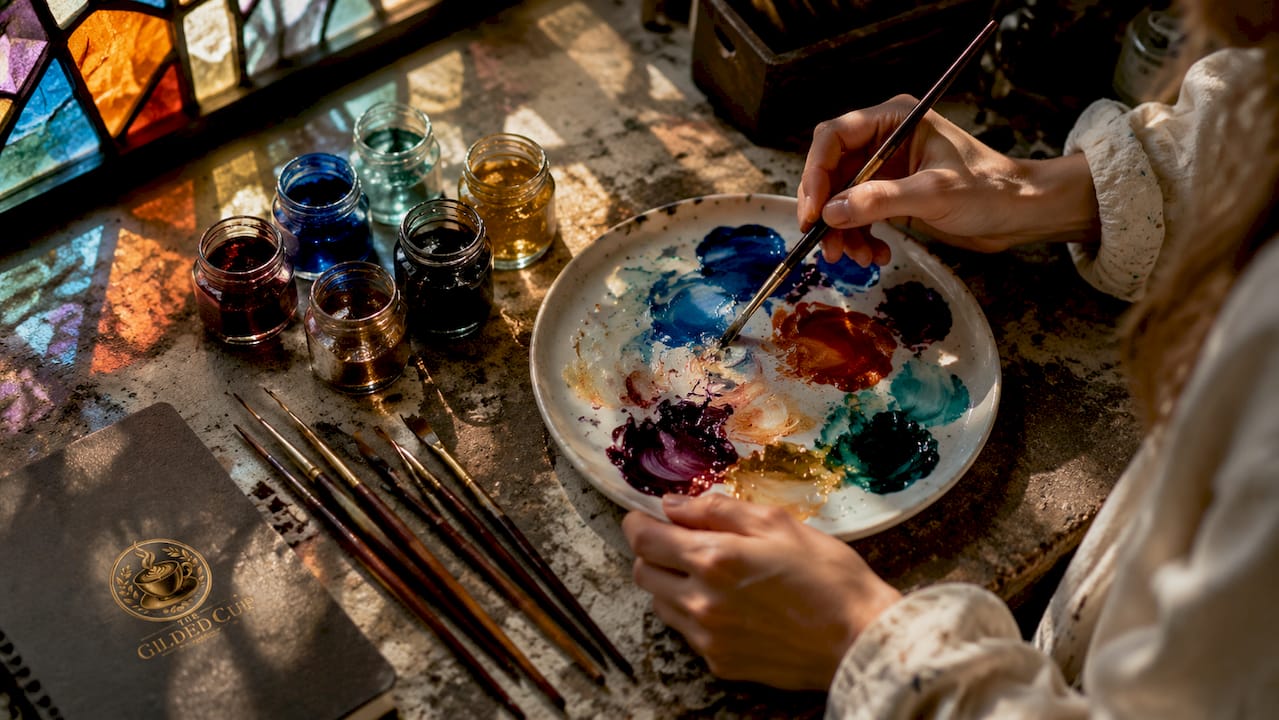
Low-fire enamels are the professional standard for permanent work. These glass-specific pigments fuse onto glass at kiln temperatures between 1,175°F and 1,400°F, producing scratch-resistant designs that bond at the molecular level with the glass surface. The result is a finish that outlasts any sealant-based approach by decades.
Glass selection matters just as much as paint. Soda-lime glass, the most common type used in everyday drinkware, accepts both acrylics and enamels well. Borosilicate glass, known for its thermal resistance, is preferred when pieces will face repeated temperature changes, such as oven-safe decorative bakeware.
The toolkit extends beyond paint and glass:
- Brushes: Round brushes for detail work, flat brushes for broad fills, and fan brushes for blending
- Stylus tools: Used in sgraffito, where artists scratch wet enamel to reveal the glass or an underlying color layer
- Primers and sealants: Surface primers improve paint adhesion on smooth glass; spray sealants protect finished non-baked work
- Masking tape: Applied before painting to create clean geometric edges, though it must be removed while paint is still wet to prevent chipping
Pro Tip: When using masking tape on glass, pull it off at a 45-degree angle while the paint is still slightly tacky. Waiting until the paint is fully dry causes edge chipping that is nearly impossible to repair cleanly.
What are the main hand-painted glass techniques?
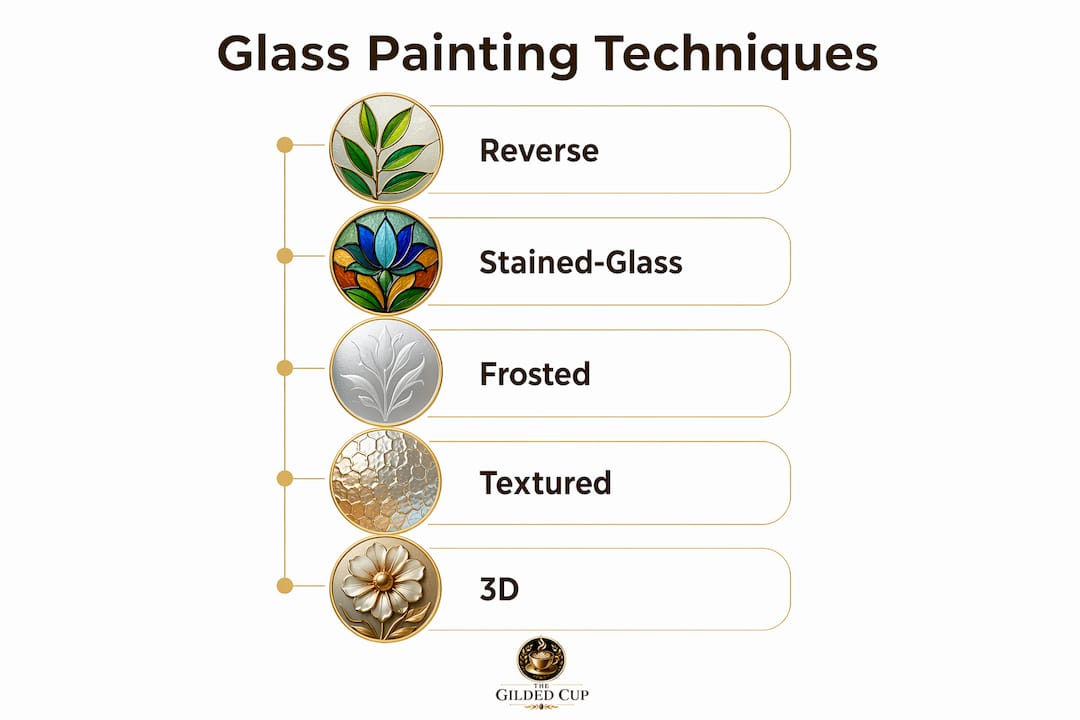
Hand-painted glass techniques span a wide spectrum, from centuries-old methods requiring extreme precision to modern approaches that welcome experimentation. The four most practiced styles each produce a visually distinct result.
| Technique | Visual Effect | Skill Level | Best For |
|---|---|---|---|
| Reverse glass painting | Deep, magnified, layered imagery | Advanced | Decorative panels, portraits |
| Stained-glass effect | Translucent, jewel-toned color fields | Intermediate | Windows, light-catching décor |
| Frosted/matte painting | Soft, diffused, etched appearance | Beginner to intermediate | Privacy panels, modern décor |
| Textured/3D painting | Raised, tactile surface effects | Intermediate | Decorative glassware, art pieces |
Reverse glass painting is the most technically demanding of all glass painting methods. The artist paints on the back surface of a pane of glass, meaning the viewer sees the work through the glass itself. This requires painting in reverse order: the finest foreground details go down first, and the background fills in last. Traditional reverse glass painting forbids error correction, since any hesitation or overpainting ruins the piece. Victorian-era Essex crystal, a form of reverse intaglio requiring weeks of work, represents the pinnacle of this tradition.
The stained-glass effect uses transparent glass paints layered in thin glazes rather than thick coats. Layering thin glazes creates movement and dimensionality by managing how light refracts through each transparent layer. Artists often outline color fields with black or dark leading paint to mimic the look of soldered lead came in traditional stained glass.
Frosted painting uses opaque or semi-opaque white and gray paints to simulate the look of acid-etched or sandblasted glass. The technique is far more forgiving than reverse painting and produces a contemporary matte aesthetic popular in home décor and privacy applications.
Textured and 3D painting exploits the physical properties of thick paint application. Applying paint on the top surface of glass produces crisp, raised lines, while layering paint between two glass sheets softens the appearance and creates a floating, three-dimensional effect. Sgraffito, where a stylus scratches through wet enamel, enriches line work and texture in ways that direct brushwork cannot achieve.
Pro Tip: For stained-glass effect work, always apply your darkest outlines first and let them cure completely before filling in color fields. Bleeding between the outline and fill colors is the most common beginner mistake and it cannot be fixed without stripping the entire section.
How is hand-painted glass created and preserved?
The process from blank glass to finished piece follows a clear sequence. Skipping any step, especially in preparation, is the leading cause of peeling, fading, and adhesion failure. Durability depends heavily on proper preparation including cleaning, priming, and either baking or sealing.
- Clean the glass thoroughly. Use isopropyl alcohol at 70% concentration or higher to remove all oils, fingerprints, and residue. Even a single fingerprint creates a barrier that prevents paint adhesion.
- Apply a glass primer if using acrylics. Primer creates a microscopically rough surface that gives paint something to grip. Skip this step and the paint will peel within weeks.
- Sketch or transfer your design. For reverse painting, place your reference image beneath the glass and trace through it. For front-surface painting, use a chalk pencil that wipes away cleanly.
- Paint in the correct order. For reverse glass painting, lay down fine details and foreground elements first. For standard front-surface work, paint backgrounds first and add details on top.
- Allow each layer to dry completely. Rushing between layers causes colors to bleed and lift. Acrylic layers typically need 20 to 30 minutes between coats; enamel layers may need longer depending on thickness.
- Fire or seal the finished piece. Low-fire enamels require kiln firing to achieve their permanent bond. Acrylic-painted pieces can be baked in a standard oven at around 350°F for 30 minutes to improve durability, or finished with a spray-on sealant for a professional surface without brush stroke marks.
- Hand-wash only. Even kiln-fired enamel pieces benefit from hand-washing with mild soap. Dishwasher heat cycles and abrasive detergents degrade painted surfaces over time, regardless of how well the piece was fired.
How does hand-painted glass compare to other decorative glass arts?
Hand-painted glass is one of several decorative glass art forms, and the distinctions between them matter to collectors and buyers. Understanding where the techniques diverge helps you identify what you are looking at and what it is worth.
| Art Form | Method | Reversible? | Typical Use |
|---|---|---|---|
| Hand-painted glass | Paint applied to surface or reverse | Yes (unfired) | Drinkware, panels, mirrors |
| Stained glass | Colored glass cut and leaded | No | Windows, architectural panels |
| Glass etching | Acid or abrasive removes surface | No | Decorative glassware, awards |
| Glass engraving | Rotary tool carves into glass | No | Portraits, commemorative pieces |
Stained glass uses pieces of colored glass assembled with lead came or copper foil, a method associated with studios like Tiffany & Co. and the Gothic cathedral tradition. The color is in the glass itself, not applied to it. Hand-painted glass can mimic this look using transparent paints, but the two processes are fundamentally different.
Glass etching, practiced with products like Armour Etch cream, removes the top layer of glass to create a frosted, matte design. It is permanent and cannot be corrected. Hand-painted glass, particularly unfired acrylic work, can be stripped and repainted, giving artists and collectors more flexibility.
Glass engraving uses rotary tools like Dremel devices to carve directly into the glass surface. The result is a three-dimensional relief that catches light differently from any painted surface. For rare glassware collectors, engraved and hand-painted pieces often occupy different price tiers, with engraving commanding a premium for its permanence and labor intensity.
Hand-painted glass wins when the goal is color, warmth, and visual complexity. The other methods excel in permanence and structural integration with the glass itself.
Where is hand-painted glass used today?
Hand-painted glass appears across a wider range of contexts than most people realize, from everyday artisan drinkware to large-scale architectural installations. The craft has experienced a measurable revival driven by demand for personalized, handmade objects in a market saturated with mass-produced goods.
Functional applications include:
- Drinkware: Wine glasses, whiskey tumblers, champagne flutes, and cocktail glasses decorated with botanical motifs, geometric patterns, or custom monograms
- Bottles: Decorative decanters and spirit bottles painted with gold leaf accents or intricate floral designs, popular as luxury gifts
- Kitchenware: Painted glass bowls, serving platters, and vases that function as both tableware and display objects
Decorative applications reach further:
- Architectural panels: Interior partitions, backsplashes, and feature walls in hotels and restaurants using large-format painted glass
- Mirrors: Reverse-painted borders and motifs on mirror frames, a technique with roots in 18th-century European decorative arts
- Lighting: Painted glass lampshades and pendant light covers that transform plain light into colored, patterned illumination
Current trends in 2026 lean toward Murano-inspired color palettes, featuring deep jewel tones like cobalt, amber, and emerald applied with transparent layering techniques. Personalized glassware, where names, dates, or custom imagery are painted onto individual pieces, has become a dominant category in the gifting market. The hospitality drinkware trends space has embraced hand-painted glass as a way to differentiate table settings in upscale dining environments.
Key takeaways
Hand-painted glass is a durable, versatile art form defined by its materials and technique, and its longevity depends entirely on proper preparation, correct paint selection, and appropriate finishing.
| Point | Details |
|---|---|
| Paint type determines durability | Low-fire enamels fired at 1,175°F to 1,400°F outlast acrylic sealant finishes by decades. |
| Reverse painting requires reverse thinking | Foreground details go down first; background fills last, with zero room for correction. |
| Preparation drives adhesion | Cleaning with isopropyl alcohol and priming before painting prevents peeling and fading. |
| Techniques serve different goals | Stained-glass effect maximizes light and color; frosted painting creates modern matte aesthetics. |
| Hand-painted glass vs. etching | Unfired painted glass is correctable; etching and engraving are permanent and irreversible. |
Why reverse painting is the technique that changed how I see glass art
When I first encountered reverse glass painting, I assumed the difficulty was overstated. It is not. The counter-intuitive workflow, where you lay down the finest detail before you have any sense of the whole composition, demands a kind of pre-visualization that most visual artists never develop. You are essentially building a painting backward, trusting that each isolated stroke will resolve into a coherent image only when the final background layer goes down. That cognitive demand is why reverse glass painting remains rare and why skilled practitioners command serious respect.
What strikes me most about hand-painted glass as a medium is how it forces artists to think about light as a material, not just an effect. Every transparent layer you add changes how light passes through the piece. Managing that refraction is not a finishing consideration. It is the central design challenge from the first brushstroke. Artists who treat glass like canvas and simply pile on opaque color miss what makes the medium extraordinary.
The tension between tradition and contemporary practice is also worth noting. Techniques like sgraffito and low-fire enamel firing connect modern practitioners to centuries of craft history. Yet the current demand for personalized, Murano-inspired drinkware is pushing artists to adapt those traditional methods to new forms and faster production cycles. The best work I have seen holds both impulses at once: technically rigorous and visually fresh. That balance is what separates a painted glass object from a piece of hand-painted glass art.
— Sharbel
Discover hand-painted glass at Thegildedcup
Thegildedcup curates hand-painted glassware from artisans who treat every piece as a finished work of art, not a production run. Each item in the collection reflects the techniques covered in this guide, from enamel-fired drinkware with Murano-inspired color palettes to reverse-painted decorative pieces built for collectors.

If you are an artist or studio interested in bringing your hand-painted glass work to a discerning audience, the Thegildedcup collabs page is the place to start. The platform actively partners with independent glassware artists to feature exclusive, limited-edition collections. For anyone ready to own a piece that carries the weight of real craft, the collection is waiting.
FAQ
What is hand-painted glass exactly?
Hand-painted glass is glass decorated by applying specialized paints, such as acrylic enamels or low-fire enamels, directly onto the surface by hand. The result is a one-of-a-kind decorative or functional object that cannot be replicated by machine printing.
How long does hand-painted glass last?
Kiln-fired enamel glass painting bonds permanently to the glass surface and can last for generations with proper care. Acrylic-painted pieces sealed with a spray sealant are durable but require hand-washing to prevent degradation.
What is the hardest hand-painted glass technique?
Reverse glass painting is widely considered the most difficult technique because artists must paint in reverse order with no ability to correct mistakes. Any hesitation or overpainting ruins the piece entirely.
Can you paint on any type of glass?
Soda-lime glass and borosilicate glass both accept enamel and acrylic paints well, making them the most practical choices. Highly tempered glass can resist paint adhesion and is not recommended for detailed decorative work.
Is hand-painted glass the same as stained glass?
No. Stained glass uses pieces of colored glass assembled with lead or copper foil, where the color is part of the glass itself. Hand-painted glass applies color onto the surface of clear or tinted glass using paints and enamels.