

What Is Enamelled Glass: Properties, Uses, and Design
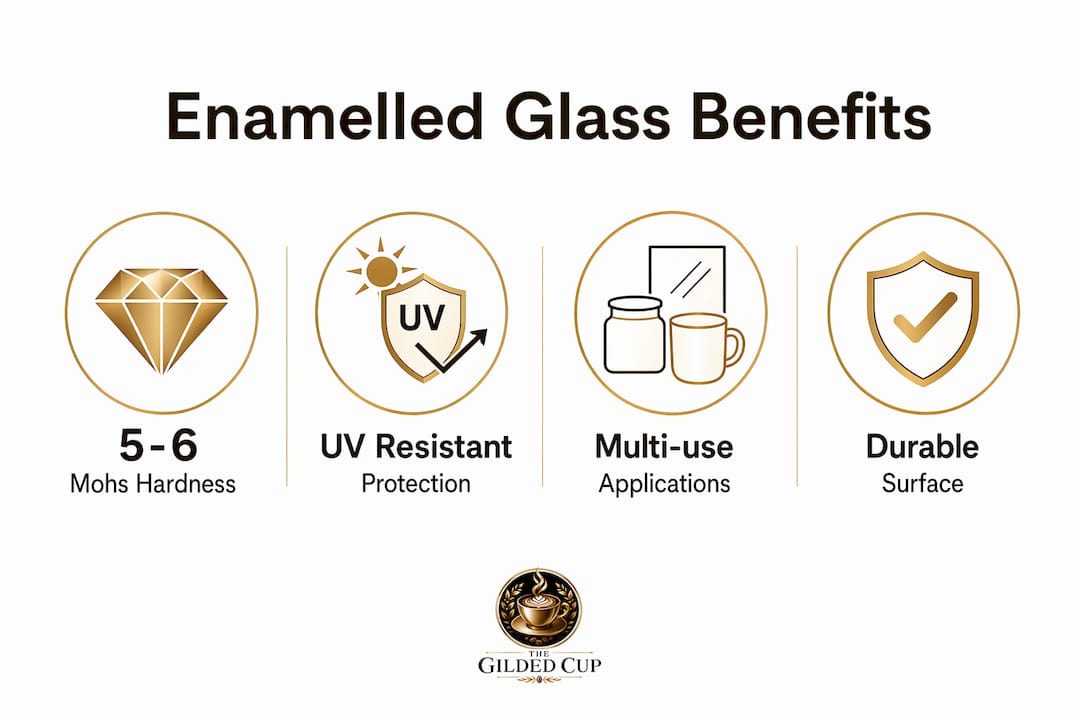
Enamelled glass is defined as glass decorated with vitreous enamel, a mixture of finely ground glass, metal oxides, and pigments, fused permanently to the surface through high-temperature firing. The industry term is “vitreous enamelled glass,” and it rates 5–6 on the Mohs hardness scale, making it harder than most paints and varnishes. That hardness translates directly into scratch resistance and color that does not fade under UV light. Whether you are an interior designer sourcing wall panels or a collector choosing decorative drinkware, understanding enamelled glass properties helps you make better decisions about durability, aesthetics, and long-term value.
What is enamelled glass and how does it differ from regular glass?
Enamelled glass starts as standard float or tempered glass, then gains a fused coating that becomes part of the surface itself. Regular glass has no protective or decorative layer. Lacquered glass uses an organic varnish applied cold, which sits on top of the glass rather than bonding with it. The critical difference is permanence: enamelled glass is tempered and suitable for exterior use due to UV and weather resistance, while lacquered glass is for indoor use only.
The enamel coating also changes the glass structurally. Tempering, which is required after enamel application, compresses the outer surfaces and puts the interior under tension. This makes the finished panel roughly four times stronger than untreated glass of the same thickness. For interior designers, that means enamelled panels can handle the mechanical stress of wall cladding, door panels, and kitchen backsplashes without the fragility concerns of standard decorative glass.
How is enamelled glass made?
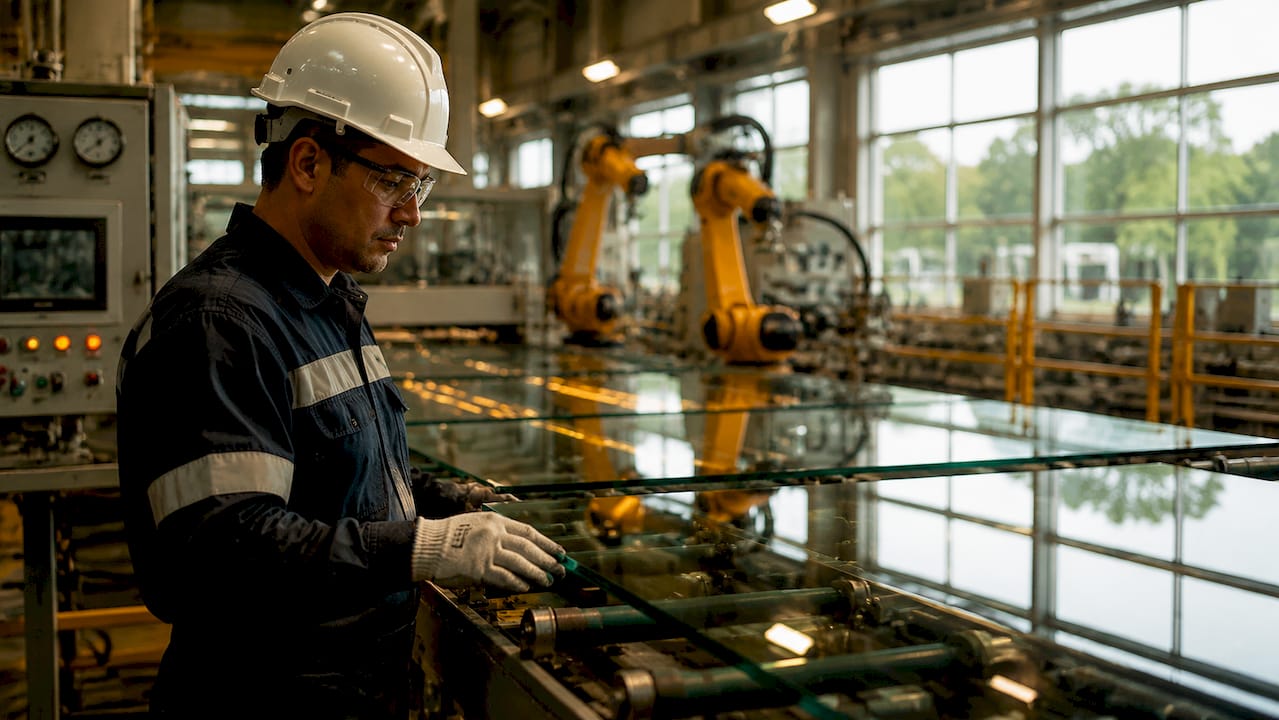
The manufacturing process splits into two distinct tracks depending on the intended use: industrial production and artistic craft. Both start with the same raw material, vitreous enamel, but the firing conditions are completely different.
The industrial baked enamel process
Industrial baked enamel glass follows a tightly controlled sequence:
- Surface preparation. The glass is cleaned thoroughly to remove oils, dust, and contaminants that would prevent adhesion.
- Enamel application. Decorative glass enamels made of finely ground glass particles, vibrant pigments, and binders are applied via screen printing or brushing across the glass surface.
- Low-temperature curing. The coated glass enters a curing oven at 160–180°C for 20–30 minutes. This cross-links the polymer binders and locks the enamel layer in place.
- Tempering. After curing, the glass is heat-tempered for safety and structural strength.
- Quality inspection. Panels are checked for color consistency, surface defects, and coating adhesion before shipping.
The artistic high-fire process
Artistic enamelled glass uses a much more intense process. Artists apply enamel powders by hand, then fire the piece at approximately 800°C for up to 8 hours. At that temperature, the enamel fully fuses with the glass substrate rather than simply bonding to the surface. Some artists intentionally allow the glass to slump and distort during firing, shaping vessels taller and narrower before the kiln so the heat achieves the intended final form.
Low-fire enamel technology has expanded access to this craft significantly. Hobbyists can now produce durable, multi-colored enamelled glass at lower temperatures, without the industrial kilns or apprenticeship training that traditional high-fire work requires.
Pro Tip: If you are experimenting with artistic enamelled glass for the first time, always fire small test tiles before committing to a full piece. Colors shift dramatically inside the kiln, and a test tile costs far less than a ruined vessel.
What are the characteristics and benefits of enamelled glass?
Enamelled glass offers a combination of physical properties that most decorative materials cannot match. The fused vitreous coating provides a chemically resistant, UV-stable surface that outperforms most paints and varnishes for glass decoration. That stability is why architectural firms specify enamelled panels for building facades that face decades of sun exposure.
Key physical properties
- Scratch resistance. The Mohs 5–6 rating means everyday contact with keys, utensils, or cleaning tools will not mark the surface.
- UV light fastness. Unlike paint, the color is locked inside the glass matrix and does not bleach or yellow over time.
- Waterproofing. Baked enamel glass panels offer excellent waterproofing and mold resistance, outperforming wood or plasterboard in humid environments like kitchens and bathrooms.
- Mechanical strength. Tempering adds structural integrity that standard decorative glass lacks.
- Color range. Metal oxide pigments produce colors from deep blacks and whites to translucent jewel tones, with no fading risk.
The table below shows how enamelled glass compares to lacquered glass and standard clear glass across the properties that matter most for interior design decisions.
| Property | Enamelled glass | Lacquered glass | Standard glass |
|---|---|---|---|
| UV resistance | Excellent | Poor | N/A |
| Outdoor use | Yes | No | Limited |
| Scratch resistance | High (Mohs 5–6) | Low | Low |
| Moisture resistance | Excellent | Moderate | None |
| Color permanence | Permanent | Fades over time | N/A |
| Structural strength | Tempered | Untempered | Untempered |
For designers tracking crystal decor trends in 2026, enamelled glass fits naturally into the current preference for materials that combine visual richness with long-term performance.
What are the popular uses of enamelled glass in art and interior design?
Enamelled glass applications span three distinct categories: decorative arts, architectural construction, and interior design. Each category uses the material’s properties differently, but all rely on the same core advantage: a permanent, vibrant surface that holds up under real-world conditions.
Decorative arts and glassware
Painted vessels, drinking glasses, and art objects represent the oldest use of vitreous enamel on glass. Traditional Venetian glassmakers used painterly floral and figurative motifs. Modern enamelled glass design has shifted toward geometric patterns, graphic color blocks, and textured surfaces that suit contemporary interiors. Artists now work with the kiln’s unpredictability rather than fighting it, treating unexpected color shifts and surface textures as part of the creative process. For collectors and enthusiasts browsing hand-painted glass techniques, enamelled glassware sits at the intersection of craft tradition and modern design.
Architectural applications
- Facade cladding. Tempered enamelled panels cover exterior building surfaces, providing weather resistance and bold color without paint maintenance.
- Spandrel glass. Enamelled panels conceal structural elements between floors in curtain wall systems, a standard specification in commercial construction.
- Interior wall panels. Kitchens, bathrooms, and commercial spaces use enamelled glass as a hygienic, easy-clean wall surface.
- Partitions and doors. Colored enamelled panels in office partitions and residential doors add privacy while maintaining a designed aesthetic.
Interior design and home decor
Interior designers use enamelled glass for backsplashes, cabinet fronts, shower enclosures, and decorative feature walls. The material’s color range and surface finish options, from matte to high gloss, give designers precise control over the visual outcome. Enamelled drinkware and barware also play a role in lifestyle branding for home bars, where the visual identity of glassware contributes directly to the overall aesthetic of a space.
Pro Tip: When specifying enamelled glass panels for a kitchen backsplash, request a fired color sample from the manufacturer before approving the full order. The cured color will differ from the enamel powder swatch.
What challenges should you keep in mind when working with enamelled glass?
Enamelled glass is durable once installed, but the path to a finished product involves real technical risks. Understanding these challenges helps both artisans and designers avoid costly mistakes.
- Color unpredictability. Final colors often differ from pre-fired enamel powders. Predicting the true fired hue requires either extensive experience or systematic test firing. This is the most common source of disappointment for first-time practitioners.
- Thermal expansion mismatch. Different thermal expansion rates between the enamel coating and the glass substrate create internal stress. If the mismatch is too large, the enamel layer cracks or the glass shatters under mechanical force.
- Thickness control. Achieving a consistent enamel layer thickness across the entire surface is critical for long-term durability. Thin spots create weak points; thick spots increase the risk of cracking during cooling.
- Handling before firing. Unfired enamel powder is fragile and smears easily. Any contamination from oils or fingerprints will show up as defects after firing.
- Warping during high-fire work. At 800°C, glass softens and can distort in unintended ways. Designers compensate by pre-shaping pieces to account for expected movement, but this requires experience to execute reliably.
- Installation stress. Even after successful firing, enamelled panels can crack if installation hardware applies uneven point loads. Proper framing and mounting systems distribute stress across the full panel.
The practical takeaway for interior designers is straightforward. Specify enamelled glass from manufacturers who provide fired color samples, documented thermal expansion data, and tempered certification. For artisans, systematic test firing is not optional. It is the only reliable way to predict outcomes before committing to a final piece.
Key Takeaways
Enamelled glass is the most durable decorative glass option available, combining a Mohs 5–6 hardness rating, permanent UV-stable color, and tempered structural strength that lacquered or standard glass cannot match.
| Point | Details |
|---|---|
| Core definition | Vitreous enamel fused to glass at high heat creates a permanent, scratch-resistant surface. |
| Two manufacturing tracks | Industrial baking at 160–180°C and artistic high-fire at ~800°C serve different applications. |
| Durability advantages | UV resistance, waterproofing, and Mohs 5–6 hardness make it suitable for kitchens, bathrooms, and facades. |
| Color unpredictability | Fired colors differ from raw enamel powders; always test fire before full production. |
| Design versatility | Enamelled glass works across decorative arts, architectural cladding, and interior design applications. |
Why enamelled glass deserves more respect from designers
I have spent years looking at how designers specify materials, and enamelled glass is consistently underestimated. Most designers reach for it as a practical solution, a backsplash that cleans easily, a spandrel panel that holds color. They rarely treat it as a design statement in its own right.
That is a missed opportunity. The firing process introduces a quality that no digital print or applied film can replicate: genuine material depth. The color sits inside the glass, not on top of it. Light interacts with an enamelled surface differently than it does with a painted or lacquered one. That difference is subtle, but it is exactly the kind of detail that separates a considered interior from a generic one.
The shift toward geometric and graphic enamel designs in contemporary work is encouraging. Artists and manufacturers are finally moving past the idea that enamelled glass must look traditional or decorative in a nostalgic sense. A flat, deeply colored enamelled panel on a kitchen wall or a set of enamelled drinkware on a bar cart can anchor a room’s palette in a way that painted surfaces simply cannot sustain over time.
My advice to designers is to treat enamelled glass as a primary material, not a finishing detail. Specify it early, get fired samples, and build the color story of a space around what the kiln actually produces rather than what a swatch suggests.
— Sharbel
Premium enamelled glassware worth exploring at Thegildedcup
Thegildedcup curates a selection of luxury glassware and decorative drinkware where craftsmanship and design meet. If enamelled glass has caught your attention as both a functional and artistic material, the collection at Thegildedcup offers pieces that demonstrate what skilled enamel work looks like at its best.
From barware built for home bars to collectible decorative vessels, Thegildedcup brings together pieces where color, surface quality, and material integrity are non-negotiable. Browse the full collection at Thegildedcup to find enamelled and hand-decorated glassware that holds up as well as it looks.
FAQ
What is the difference between enamelled glass and lacquered glass?
Enamelled glass uses vitreous enamel fused to the surface through high-temperature firing, making it suitable for outdoor and humid environments. Lacquered glass uses an organic varnish applied cold, which is for indoor use only and fades under UV exposure.
Is enamelled glass durable enough for kitchens and bathrooms?
Yes. Baked enamel glass panels offer excellent waterproofing, mold resistance, and mechanical strength, outperforming wood or plasterboard in humid environments. The tempered base adds structural integrity for wall-mounted applications.
How hard is enamelled glass?
Enamelled glass rates 5–6 on the Mohs hardness scale, which means it resists scratching from everyday contact with utensils, cleaning tools, and most household objects.
Can the enamel color change after firing?
Yes. Final fired colors often differ significantly from the raw enamel powder. Experienced artisans and manufacturers run test firings to calibrate color before committing to full production runs.
What causes enamelled glass to crack?
The most common cause is a mismatch between the thermal expansion coefficients of the enamel coating and the glass substrate. Uneven enamel thickness and improper installation hardware that applies point loads to the panel also contribute to cracking.