

The Importance of Proper Stemware for Wine Lovers
Proper stemware is defined as glassware engineered to concentrate aroma, control temperature, and deliver wine cleanly to the palate. The importance of proper stemware goes far beyond aesthetics. Approximately 80% of perceived flavor in wine comes from aroma, which means the glass you choose directly controls how much of that flavor you actually experience. Standards like ISO 3591:1977 formalize this reality by specifying exact glass dimensions for sensory evaluation. Whether you are a casual enthusiast or a dedicated collector, the right glass is not a luxury. It is a functional tool.
Why does stemware shape influence aroma and flavor perception?
Glass shape is the primary variable in how wine smells and tastes. The bowl’s geometry controls how volatile aromatic compounds collect above the wine’s surface and how they reach your nose. A wider bowl increases the wine’s surface area, allowing more oxygen contact and releasing more aroma. A narrower rim then funnels those aromas toward your nose in a concentrated stream.
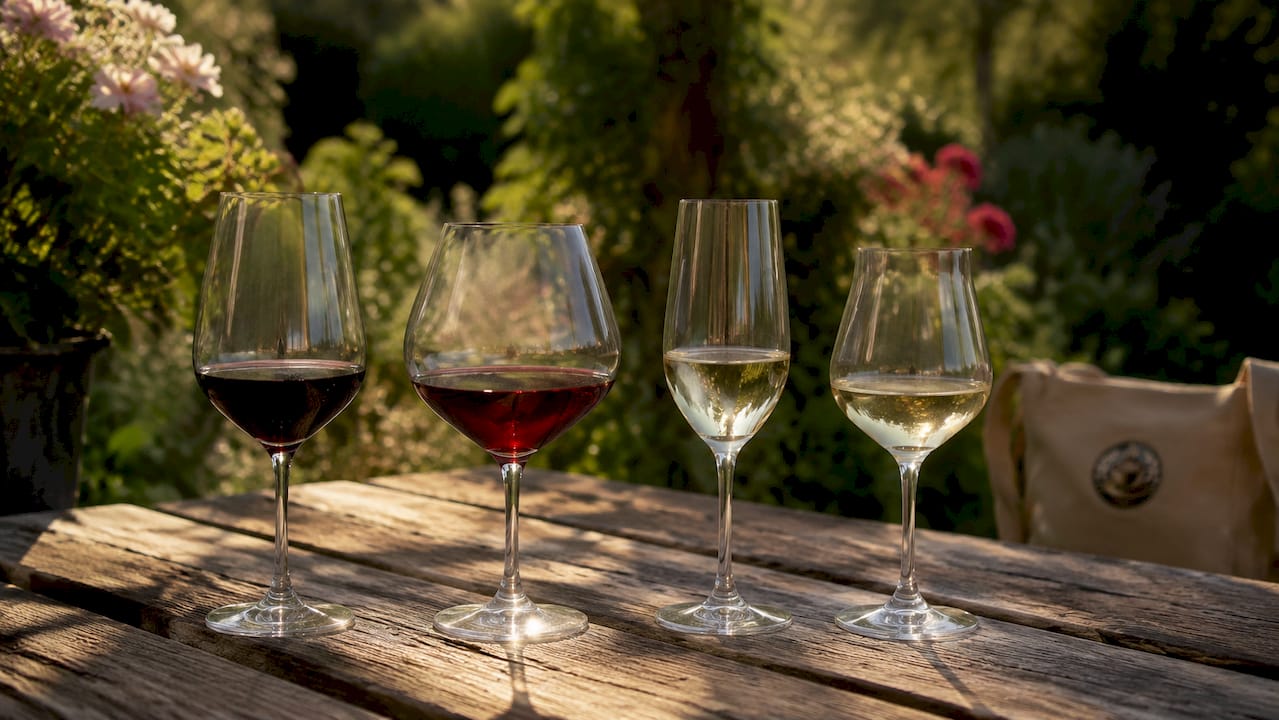
The science here is not suggestion. It is physics and physiology working together. Shape influences oxygen contact and aroma delivery, which directly affects tannin softening and how fruit aromas present themselves differently in red, white, and sparkling wines. A wide-bowled Burgundy glass softens the perception of grippy tannins in Pinot Noir by increasing aeration. A narrow flute preserves carbonation in sparkling wine by limiting surface area and slowing CO2 release.
Crossmodal perception also plays a role. The weight of a glass, the thickness of its rim, and even the clarity of the crystal all shape how a drinker interprets wine quality before the first sip. A heavy, thick-rimmed glass signals cheapness to the brain, and that signal subtly degrades the tasting experience. The right glassware manages oxygen contact and liquid flow, objectively altering tannin perception and fruit balance through measurable physical and physiological means.
- Wide bowl: Increases oxygen exposure, softens tannins, and releases bold fruit aromas. Best for full-bodied reds like Cabernet Sauvignon and Syrah.
- Narrow bowl: Preserves delicate aromas and carbonation. Best for white wines and sparkling wines like Champagne.
- Tulip shape: Balances aeration and aroma concentration. Versatile for most wine styles.
- Straight-sided glass: Provides minimal aroma concentration. Suitable for casual drinking but not for serious tasting.
Pro Tip: Swirl wine in a wide-bowled glass for 10–15 seconds before nosing it. This mechanical action accelerates aroma release and gives you a far more complete picture of the wine’s character.
What features make quality stemware effective?
The stem is the first feature that separates functional wine glasses from ordinary drinkware. Holding the glass by the stem keeps hand heat from transferring to the wine, which is especially critical for white and sparkling wines served at 45–55°F. A stemless glass may look modern and casual, but stemless glasses raise the risk of warming delicate wines through direct hand contact, degrading their intended sensory profile within minutes.
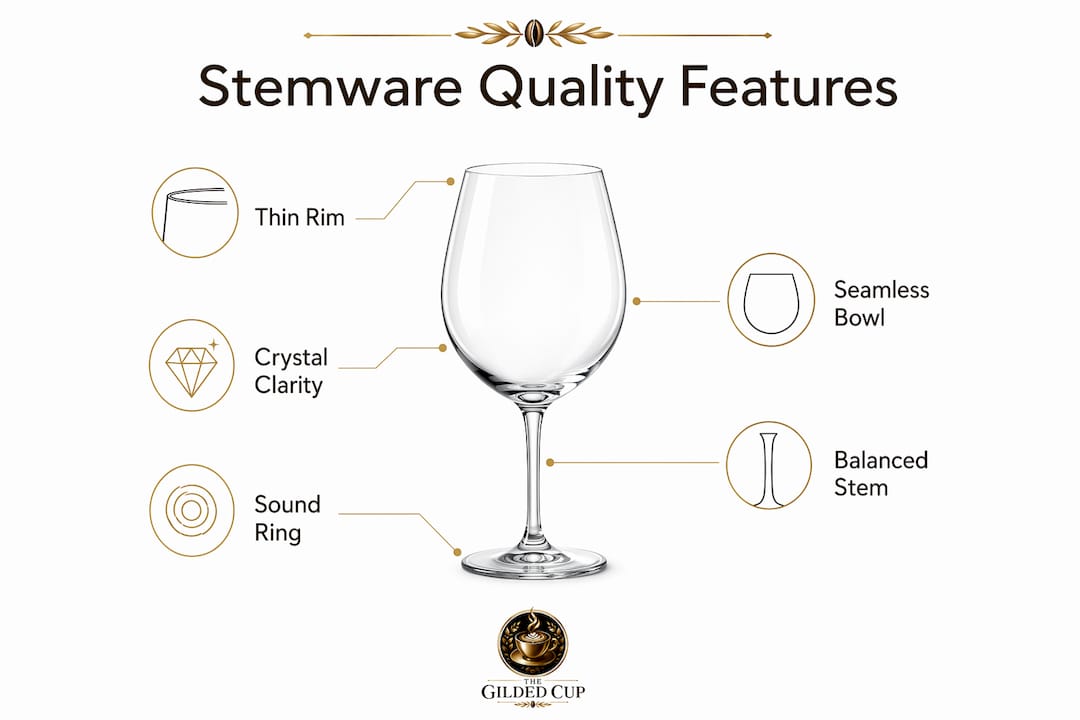
Beyond the stem, four structural features define quality stemware:
- Rim thickness. Thin crystal rims deliver wine to the palate with minimal physical intrusion, keeping the focus on the wine’s texture rather than the glass. Thick rims create a noticeable lip that interrupts liquid flow and distracts from flavor.
- Bowl size and shape. The bowl must be large enough to allow swirling without spilling and shaped to direct aromas toward the nose. A bowl that is too small traps aromas poorly. A bowl that is too large dissipates them.
- Material. Lead-free crystal is the standard for quality stemware. It can be blown thinner than standard glass, producing lighter, more elegant rims and clearer walls. Standard glass requires thicker walls to maintain structural integrity, which compromises both aesthetics and function.
- Clarity. A clear, colorless glass lets you evaluate the wine’s color and viscosity accurately. Tinted or heavily textured glass obscures these visual cues, which are part of the full tasting experience.
Knowing the signs of quality drinkware before you buy saves money and prevents disappointment. A glass that rings clearly when tapped, has a seamless base, and feels balanced in the hand is almost always well-constructed.
Pro Tip: Hold a glass up to a light source before purchasing. Quality crystal shows no bubbles, seams, or cloudiness. Any of those defects indicate lower-grade manufacturing that will affect both durability and sensory performance.
Do you need multiple specialized glasses or a universal glass?
The wine industry has long promoted varietal-specific glasses, with distinct shapes for Bordeaux, Burgundy, Riesling, Champagne, and dozens of other styles. The argument is that each shape optimizes the nuances of a specific grape or wine style. That argument has merit at the highest levels of wine service. A grand cru Burgundy genuinely benefits from a wide-bowled glass that maximizes its aromatic complexity.
For most wine drinkers, however, the practical case for a single universal glass is strong. ISO 3591:1977 defines a 215 ml tulip-shaped glass as the benchmark for sensory evaluation across wine styles. That standard exists precisely because a well-proportioned tulip shape handles aroma concentration and variety neutrality better than most specialized shapes handle their intended wine. Professional sommeliers recognize this. A single universal glass can serve most wines effectively, reducing complexity and guest intimidation while maintaining quality tasting experiences.
| Approach | Best for | Trade-off |
|---|---|---|
| Varietal-specific glasses | Serious collectors, formal tastings, grand cru wines | Higher cost, more storage, steeper learning curve |
| Universal tulip glass | Everyday drinking, hosting, wine education | Minor loss of nuance for highly specialized wines |
| Entry-level generic glass | Casual occasions, outdoor events | Significant loss of aroma concentration and tactile quality |
The honest answer is that context determines the right choice. A wine educator running a class benefits from the different types of wine glasses available for varietal comparison. A host serving six guests at dinner benefits from a single quality universal glass that works across all pours. Buying one excellent universal glass outperforms owning twelve mediocre specialized ones.
How to choose and use stemware to enhance your wine experience
Selecting the right glass starts with one decision: choose a medium-sized tulip shape with a stem, a thin rim, and clear lead-free crystal construction. That single choice covers the majority of wine styles and occasions. From there, how you use the glass matters as much as which glass you choose.
- Hold by the stem, always. Hand warmth raises wine temperature faster than most people expect. White wine served at 50°F can reach 65°F within ten minutes of bowl contact. That temperature shift flattens acidity and mutes aromatics.
- Pour the right amount. Fill the glass no more than one-third full. Professional fine dining uses 1 oz tasting pours to examine wine precisely. For home enjoyment, a 4–5 oz pour in a standard glass leaves enough headspace for swirling and aroma collection.
- Swirl before nosing. Swirling coats the bowl’s interior with wine and dramatically increases the surface area releasing aromas. Do it for at least ten seconds before you bring the glass to your nose.
- Nose before tasting. Spend five seconds with your nose at the rim before sipping. The aroma impression you form there sets the context for everything you taste. Skipping this step wastes the glass’s primary function.
- Keep glasses clean and clear. Detergent residue and water spots suppress aroma and alter flavor. Rinse with hot water and air-dry upright, or follow a proper luxury glassware cleaning routine to preserve both clarity and function.
Pairing good wine with good glasses in an educational setting creates more memorable tasting experiences than expensive wine served in poor glassware. That finding should reframe how you think about your glassware budget. A $20 bottle in a quality glass will outperform a $60 bottle in a thick-rimmed tumbler.
Key Takeaways
The single most important fact about stemware is this: the glass you choose controls how much of a wine’s aroma and flavor you actually perceive, making proper stemware as important as the wine itself.
| Point | Details |
|---|---|
| Aroma drives flavor | 80% of perceived wine flavor comes from aroma, which stemware directly manages through bowl shape and rim design. |
| ISO 3591:1977 sets the standard | A 215 ml tulip-shaped glass meets the international benchmark for sensory evaluation across most wine styles. |
| Stem prevents warming | Holding by the stem keeps hand heat from degrading white and sparkling wines served at precise temperatures. |
| Thin rims improve experience | Lead-free crystal rims deliver wine to the palate without physical intrusion, keeping focus on texture and flavor. |
| One quality glass beats many poor ones | A single well-made universal glass outperforms a collection of mediocre varietal-specific glasses for most drinkers. |
What I have learned from years of paying attention to the glass
Wine education tends to focus on grapes, regions, and vintages. The glass gets treated as an afterthought. That is a mistake I see repeated constantly, even among people who spend serious money on wine.
My clearest memory of this lesson came from a side-by-side tasting of the same Côtes du Rhône poured into a thin-walled crystal tulip and a standard restaurant tumbler. The wine in the tumbler tasted flat, slightly harsh, and short. The same wine in the crystal glass showed red fruit, a hint of pepper, and a finish that lasted. Same wine, same vintage, same pour temperature. Different glass.
The diminishing returns of excessive specialization are real, though. I have tasted through collections of fifteen varietal-specific glasses and found that the differences between a dedicated Riesling glass and a quality universal tulip are genuinely small for most wines. The jump from a poor glass to a good universal glass is enormous. The jump from a good universal to a specialized varietal glass is modest. Spend your money on quality first, specialization second.
The most common misconception I encounter is that stemware is about status. It is not. A quality glass is a sensory instrument. It manages aroma, controls temperature, and delivers wine to your palate in the way the winemaker intended. Understanding that changes how you shop for glasses and how you experience every bottle you open.
— Sharbel
Quality stemware worth drinking from, at Thegildedcup
The right glass changes what you taste. Thegildedcup curates a selection of premium stemware chosen for craftsmanship, material quality, and sensory performance, not just appearance.
Whether you are building a first serious collection or adding to an existing one, Thegildedcup’s curated stemware collection covers universal tulip styles and specialized options for collectors who want both. Each piece is selected with the same criteria covered in this article: rim thinness, crystal clarity, bowl proportion, and stem design. If you want to know more about what separates good glassware from great glassware before you buy, the host’s guide to designer glassware at Thegildedcup is a strong starting point.
FAQ
Why does stemware matter for wine tasting?
Stemware controls aroma concentration, oxygen exposure, and liquid delivery to the palate. Since approximately 80% of perceived wine flavor comes from aroma, the glass shape directly determines how much of that flavor you experience.
What is the best universal wine glass shape?
The ISO 3591:1977 standard identifies a 215 ml tulip-shaped glass as the benchmark for sensory evaluation. This shape balances aroma concentration and variety neutrality across most wine styles.
Does rim thickness really affect the tasting experience?
Thin crystal rims deliver wine to the palate with minimal physical intrusion, keeping the focus on the wine’s texture and flavor. Thick rims interrupt liquid flow and create a tactile distraction that reduces overall enjoyment.
Should I use stemless glasses for wine?
Stemless glasses transfer hand heat to the wine quickly, which can warm white and sparkling wines above their intended serving temperature within minutes. Stemmed glasses preserve temperature and flavor balance more reliably.
How many wine glasses do I actually need?
One high-quality universal tulip glass handles most wines effectively. Professional sommeliers often prefer a single well-made glass over multiple specialized shapes to reduce complexity while maintaining quality tasting experiences.