

Mixing Signature Cocktails: A Home Bartender's Guide
A signature cocktail is defined as a personally crafted drink that balances spirit, sweetener, and citrus in a ratio designed to deliver consistent, memorable flavor. The professional standard for this balance is the 2:1:1 formula: 2 parts spirit, 1 part sweet, 1 part sour. This guide to mixing signature cocktails walks you through every step, from stocking your bar with the right tools and ingredients, to applying proven cocktail mixing techniques, to serving with style at your next gathering. Whether you are new to mixology or refining your home bartending practice, these principles produce results worth repeating.
What tools and ingredients do you need to mix signature cocktails?
The right setup makes the difference between a frustrating first attempt and a drink you are proud to serve. Before you mix a single cocktail, build your toolkit and ingredient base around what professional bartenders actually use.
Essential barware
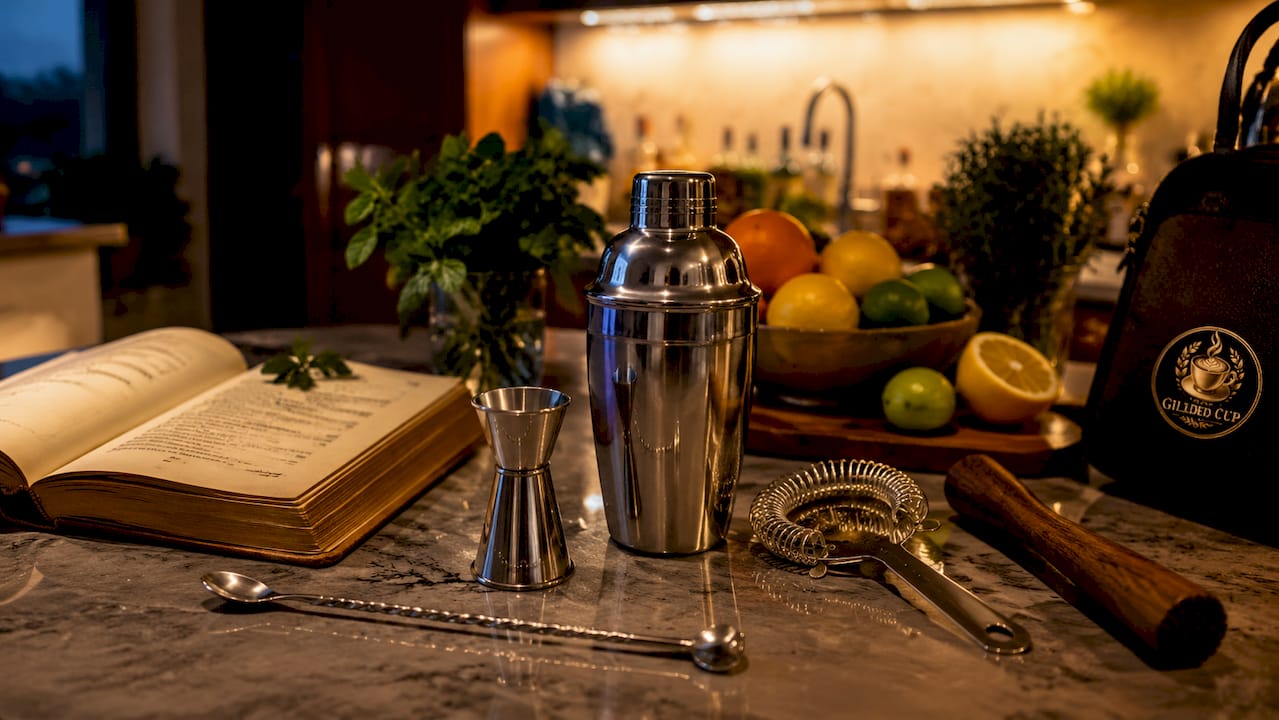
Every home bar needs five core tools. A jigger measures your pours accurately, which is the single most important factor in a balanced drink. A cocktail shaker (Boston or cobbler style) handles all shaken recipes. A bar spoon stirs spirit-forward drinks without introducing air bubbles. A Hawthorne strainer fits over the shaker tin, and a fine-mesh strainer catches pulp and ice shards when double straining. A muddler releases oils and juice from fresh herbs and citrus directly in the glass.
| Tool | Purpose | Usage Note |
|---|---|---|
| Jigger | Measures spirit and modifier volumes | Use 1 oz and 2 oz sides for the 2:1:1 ratio |
| Boston Shaker | Shakes citrus and cream cocktails | Seal tightly; shake 10–15 seconds |
| Bar Spoon | Stirs spirit-forward drinks | 30–40 rotations for proper dilution |
| Hawthorne Strainer | Strains shaken drinks | Pair with fine-mesh for double straining |
| Muddler | Extracts flavor from herbs and fruit | Press firmly; do not grind |
| Fine-Mesh Strainer | Removes pulp and ice shards | Required for egg white and citrus drinks |
Spirits, modifiers, and fresh ingredients
Different spirits deliver distinct flavor profiles that define your cocktail’s identity. Vodka is neutral and versatile, gin adds botanical complexity, tequila brings bold agave character, rum offers sweetness and depth, and whiskey provides warmth and spice. Stock at least two of these before you start experimenting.
Modifiers shape the supporting layers of your drink. Sweet vermouth, dry vermouth, Angostura bitters, Campari, and simple syrup are the most useful starting points. Vermouth must be refrigerated after opening to prevent oxidation. An open bottle left on the shelf goes flat within days and ruins any cocktail it touches.
Fresh citrus juice is non-negotiable for quality results. Bottled lemon and lime juice contain preservatives that dull the brightness a cocktail needs. Squeeze fresh every session.
Pro Tip: Store your vermouth in the refrigerator door and label it with the opening date. Replace it after three to four weeks for the best flavor.
How does the 2:1:1 ratio create balanced signature drinks?
The 2:1:1 ratio is the foundation for any sour-style cocktail. Two parts spirit provide the backbone, one part sweetener softens the alcohol, and one part citrus adds brightness and acidity. This structure prevents any single element from overpowering the others.
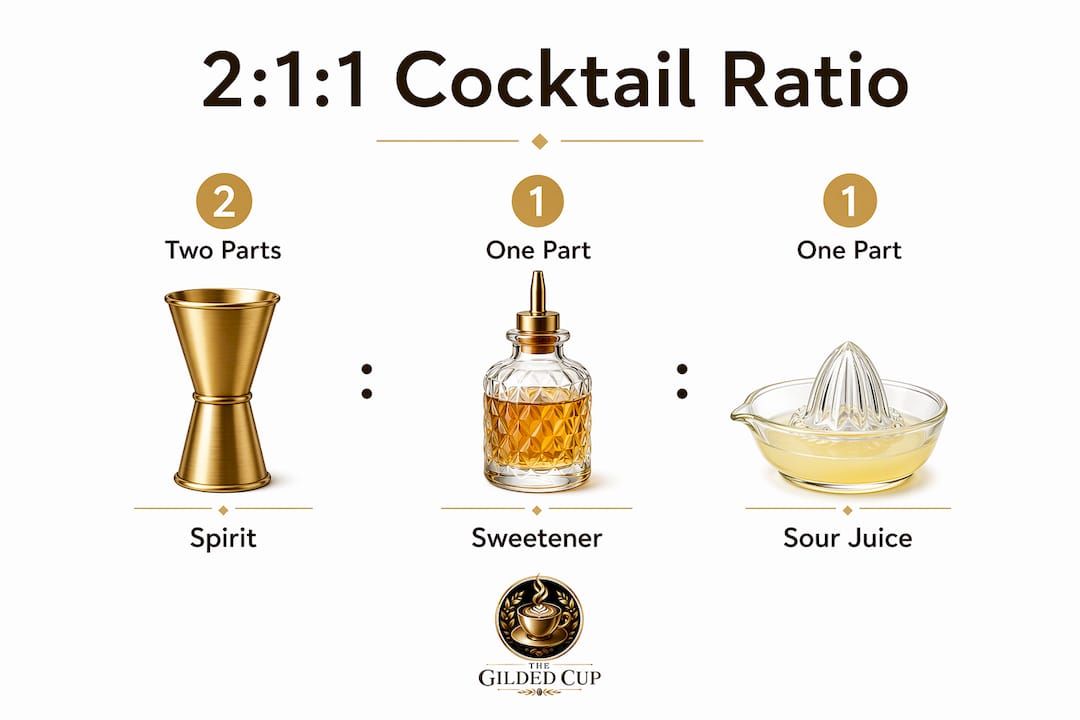
The Margarita is the clearest example: 2 oz tequila, 1 oz triple sec (sweet), 1 oz fresh lime juice (sour). The Whiskey Sour follows the same structure: 2 oz bourbon, 1 oz simple syrup, 1 oz fresh lemon juice. Both drinks taste completely different because the spirit changes everything, but the underlying architecture is identical.
| Cocktail | Spirit (2 parts) | Sweet (1 part) | Sour (1 part) |
|---|---|---|---|
| Margarita | Tequila | Triple Sec | Fresh Lime Juice |
| Whiskey Sour | Bourbon | Simple Syrup | Fresh Lemon Juice |
| Daiquiri | White Rum | Simple Syrup | Fresh Lime Juice |
| Gimlet | Gin | Simple Syrup | Fresh Lime Juice |
| Cosmopolitan | Vodka | Triple Sec | Fresh Lime Juice |
Once you understand the ratio, you can adjust it by taste. Prefer a tarter drink? Pull the sweet back to 0.75 oz. Want something rounder and softer? Add a quarter ounce more of simple syrup. The ratio is your starting point, not a hard ceiling.
Pro Tip: Mix your first signature cocktail using the 2:1:1 ratio exactly as written. Taste it, then adjust one variable at a time. This builds your palate faster than guessing from scratch.
What mixing techniques produce the best signature cocktails?
Technique is where most home bartenders lose points. Applying the wrong method to a drink changes its texture, clarity, and temperature in ways that no amount of good ingredients can fix.
When to shake, stir, build, or muddle
Shaking is required for cocktails with citrus, cream, or egg white. Stirring is correct for spirit-forward, clear drinks like a Negroni or Manhattan. Building directly in the glass works for highballs like a Gin and Tonic or a Rum and Cola. Muddling applies when fresh herbs, cucumber, or whole citrus pieces need to release their oils before the liquid is added.
Understanding when to shake, stir, or muddle directly impacts a drink’s clarity and texture. Shaking a Negroni, for example, introduces tiny air bubbles that cloud the drink and give it a frothy, diluted quality that no serious bartender would serve.
Step-by-step: shaking a sour cocktail
- Add ice to your Boston shaker tin until it is two-thirds full.
- Measure and pour your spirit, sweetener, and citrus using a jigger.
- Seal the shaker and shake hard for 10–15 seconds. You should feel the tin get very cold.
- Hold a Hawthorne strainer over the tin and pour through a fine-mesh strainer into your chilled glass. This double straining technique removes ice shards and pulp for a smooth, refined texture.
- Add your garnish and serve immediately.
Step-by-step: stirring a spirit-forward cocktail
- Fill a mixing glass with large ice cubes.
- Measure and add all spirits and modifiers.
- Stir with a bar spoon for 30–40 rotations. This chills and dilutes the drink without clouding it.
- Strain into a chilled coupe or rocks glass using a Hawthorne strainer.
Ice selection and its impact
Ice type changes how a drink tastes. Crushed ice chills quickly and dilutes faster, making it ideal for drinks like a Mint Julep where dilution is part of the flavor profile. Large format cubes melt slowly and preserve the integrity of spirit-forward drinks like an Old Fashioned. Cloudy, freezer-burned ice introduces off-flavors. Use fresh, clear ice whenever possible.
One advanced technique worth knowing: egg white cocktails require a dry shake before adding ice. Shake the egg white and spirits together without ice first to emulsify the proteins. Then add ice and shake again. The result is a stable, silky foam that sits cleanly on top of the drink. The Ramos Gin Fizz is the classic example of this method.
Pro Tip: Use a fine-mesh strainer on every shaken cocktail that contains citrus. The difference in mouthfeel is immediate and noticeable.
How do you batch and serve signature cocktails for a crowd?
Hosting a party while mixing individual cocktails to order is a recipe for spending the entire evening behind the bar. Batching solves this problem without sacrificing quality.
The core rule for batching is straightforward: pre-mix all non-carbonated components ahead of time and add sparkling elements only at the moment of serving. Carbonated mixers like club soda, tonic, or sparkling wine go flat within minutes if added to a batch in advance.
Here is how to plan your quantities and setup:
- Calculate volume by guest count. Plan for 2–3 drinks per guest over a two-hour gathering. A standard cocktail is roughly 4 oz of mixed liquid. For 10 guests, that is 80–120 oz of finished drink, or about 10–15 cups of base mixture before ice dilution.
- Use a glass dispenser with a spigot. This lets guests serve themselves, keeps the drink cold, and looks polished on a bar cart or table. It also frees you to enjoy the party.
- Chill your glassware in advance. Place glasses in the freezer for 10–15 minutes before guests arrive. A cold glass keeps the drink colder longer and signals attention to detail.
- Choose garnishes that hold up. Citrus wheels, fresh herbs like mint or rosemary, and dehydrated fruit slices all stay presentable for hours. Avoid garnishes that wilt or brown quickly.
- Offer a mocktail version. Replace the spirit with a non-alcoholic alternative like Seedlip or a flavored sparkling water. Keep the same ratio and garnish so the mocktail looks and feels as considered as the cocktail.
Serving in appropriate glassware with thoughtful garnishes and labeling each drink for guests elevates the entire experience. A small card naming the cocktail and listing its key ingredients adds a personal, hosting touch that guests remember.
Pro Tip: Print a small tent card for each drink with its name and a one-line description. Guests love knowing what they are drinking, and it sparks conversation.
Key takeaways
Mastering signature cocktails requires the 2:1:1 ratio, fresh ingredients, and the right technique applied to the right drink type.
| Point | Details |
|---|---|
| Start with the 2:1:1 ratio | Use 2 parts spirit, 1 part sweet, 1 part sour as your baseline for every sour-style cocktail. |
| Fresh ingredients matter most | Squeeze citrus fresh and refrigerate vermouth after opening to protect flavor quality. |
| Match technique to drink type | Shake citrus drinks, stir spirit-forward cocktails, and dry shake any recipe with egg white. |
| Ice type affects the final drink | Use large cubes for spirit-forward drinks and crushed ice for cocktails where dilution is intentional. |
| Batch smart for entertaining | Pre-mix base components ahead of time and add carbonated elements only at the moment of serving. |
What i have learned from years behind the home bar
The first time I made a Whiskey Sour that actually tasted like a Whiskey Sour, I had done nothing different except squeeze a fresh lemon instead of reaching for the bottle in the fridge. That single change was more impactful than any new spirit or fancy modifier I had bought. Fresh ingredients are not a preference. They are the whole point.
The 2:1:1 ratio changed how I think about cocktails entirely. Before I understood it, I was guessing every time. Once I internalized it, I stopped following recipes and started creating. The Penicillin cocktail taught me something else: layering contrasting spirits creates evolving flavor that shifts as you drink it. That kind of depth is achievable at home once you understand the structure underneath.
My honest advice is to resist the urge to collect spirits before you master technique. A well-made Daiquiri with three ingredients beats a poorly executed cocktail with ten. Build your palate on the classics, then personalize from there. The right barware for your home bar matters more than most people realize. A quality jigger and a proper mixing glass change the physical experience of making drinks, and that changes how often you actually do it.
Presentation is the final multiplier. The same cocktail served in a chilled coupe with a fresh garnish tastes better than the same drink in a warm tumbler. That is not psychology. That is hospitality.
— Sharbel
Upgrade your home bar with the right glassware
Every technique in this article performs better when you serve the finished drink in glassware that matches the cocktail. A Negroni in a crystal rocks glass, a Daiquiri in a chilled coupe, a Gin and Tonic in a tall highball glass. The vessel shapes the experience.

Thegildedcup carries a curated selection of luxury cocktail glassware and fine drinkware designed for exactly this kind of home entertaining. From hand-blown coupes to weighted rocks glasses, every piece is chosen for craftsmanship and visual impact. If you are building a home bar worth showing off, explore the full collection at Thegildedcup and find glassware that matches the quality of what you are pouring into it. For a complete setup checklist, the upscale bar setup guide is a strong starting point.
FAQ
What is the 2:1:1 cocktail ratio?
The 2:1:1 ratio means 2 parts spirit, 1 part sweetener, and 1 part citrus juice. Professional mixologists use this formula as the foundation for balanced sour-style cocktails like the Margarita, Daiquiri, and Whiskey Sour.
When should you shake vs. stir a cocktail?
Shake any cocktail that contains citrus juice, cream, or egg white. Stir spirit-forward drinks like a Negroni or Manhattan to preserve clarity and avoid unwanted dilution from air bubbles.
How do you batch cocktails for a party?
Pre-mix all non-carbonated ingredients in advance and store them chilled. Add sparkling mixers only at the moment of serving, and plan for 2–3 drinks per guest over a two-hour event.
Why does fresh citrus juice matter so much?
Bottled citrus juice contains preservatives that dull brightness and alter flavor. Bartender Rob Fisher identifies fresh juice as non-negotiable because it delivers the acidity and aroma that make a cocktail taste alive.
What glassware should you use for signature cocktails?
Match the glass to the drink type: a coupe for shaken sours, a rocks glass for spirit-forward drinks, and a highball for long drinks. Chilling the glass before serving keeps the cocktail colder and improves the overall drinking experience.
Recommended
- Must-have bar glasses: the affluent collector’s guide – The Gilded Cup
- Elegant bar accessories list: the affluent collector’s guide – The Gilded Cup
- Step-by-step cocktail serving: master elegant presentation - The – The Gilded Cup
- Benefits of quality home barware: the affluent host’s guide – The Gilded Cup