

Hospitality Drinkware Selection Tips for Professionals
Hospitality drinkware selection is defined by matching glass type, material durability, and service context to deliver consistent guest presentation and operational longevity. The right glassware communicates quality before a single sip is taken. Choosing between fully tempered glass, rim-tempered glass, and lead-free crystal determines not just aesthetics but breakage rates, dishwasher compatibility, and total cost of ownership. These hospitality drinkware selection tips cover every decision point, from glass type and material standards to inventory management and venue-specific recommendations, so you can build a program that performs as well as it looks.
1. Know your glass types before buying anything
A bar glassware essentials checklist starts with understanding what each glass type does functionally, not just what it looks like on a table. Every glass shape exists for a reason tied to beverage temperature, aroma delivery, or drinking mechanics.
The core glass types every hospitality program needs:
- Water goblets: The workhorse of any table setting. Typically 12 to 16 oz, with a wide bowl for ice and easy refilling.
- Red wine glasses: Large, round bowls that maximize surface area for aeration. Bordeaux and Burgundy styles serve different varietals but a universal red wine glass covers most needs.
- White wine glasses: Smaller bowls than red wine glasses to maintain cooler temperatures and concentrate delicate aromatics.
- Champagne flutes: Tall, narrow bowls that preserve carbonation and direct bubbles upward. For upscale events, champagne glass service protocol matters as much as the glass itself.
- Highball and rocks glasses: The foundation of any bar program. Highballs for long drinks and Collins cocktails; rocks glasses for spirits served neat or on ice.
- Martini and coupe glasses: Stemmed cocktail glasses for shaken or stirred drinks served without ice. Coupes are increasingly preferred over martini glasses for stability and spill resistance.
- Decanters: Not just for wine. Decanters serve whiskey and spirits programs in fine dining and bar settings, and the finest decanter styles vary significantly by pour volume and aesthetic.
Pro Tip: Universal wine glasses, typically 18 to 22 oz with a tulip-shaped bowl, cover most wine service needs effectively without requiring separate red and white inventories. For most casual and mid-scale venues, one universal wine glass cuts SKU complexity in half.
2. Match material to your service environment
Glass material is the single biggest cost driver in hospitality procurement. Choosing the wrong material means higher breakage rates, faster replacement cycles, and inconsistent presentation across service periods.
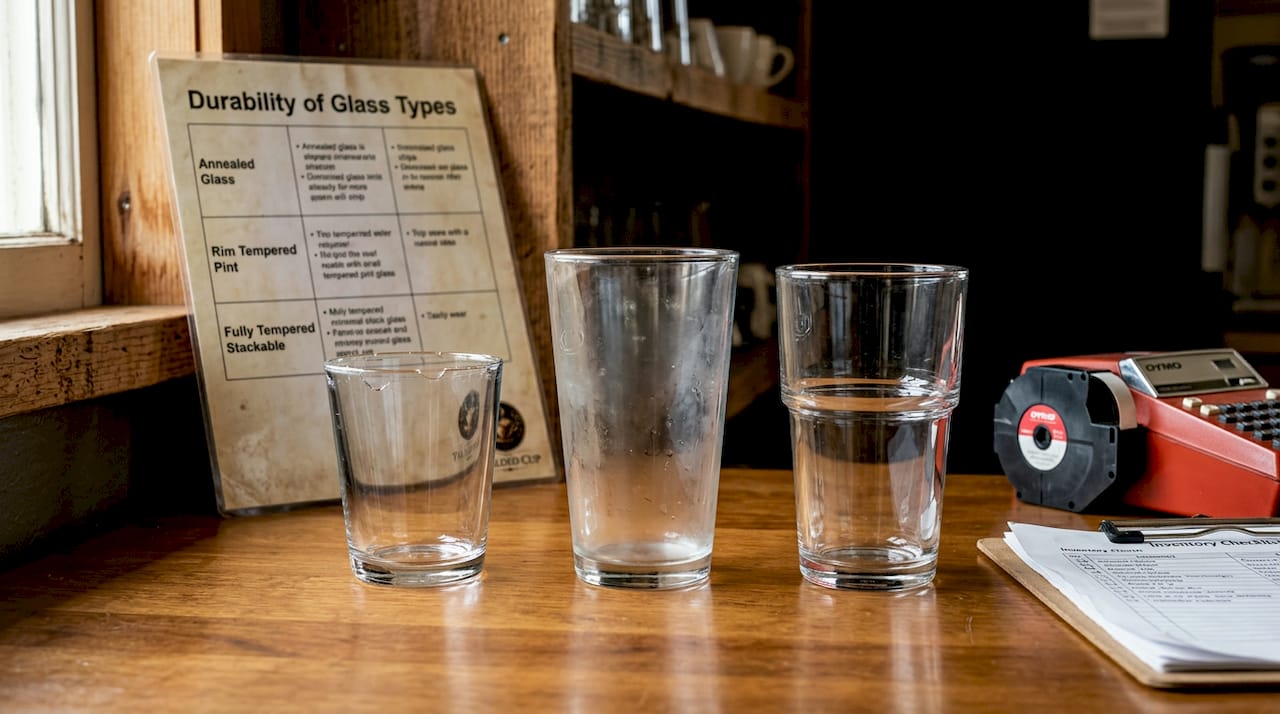
The three main manufacturing types are annealed glass, rim-tempered glass, and fully tempered glass. Annealed glass is standard commercial glass with no additional heat treatment. It is the most affordable option but breaks most easily and shatters into sharp shards. Rim-tempered glass has a strengthened rim only, reducing chipping from stacking and handling. Fully tempered glass undergoes complete heat treatment and delivers breakage rates around 2 to 4% annually, with operators reporting usable lifespans beyond five years. That durability translates directly into lower replacement costs over a three-year horizon.
| Glass type | Breakage rate | Best for | Dishwasher safe |
|---|---|---|---|
| Annealed | High | Low-volume, decorative | Limited cycles |
| Rim-tempered | Moderate | Mid-scale restaurants | Yes |
| Fully tempered | 2 to 4% annually | High-volume bars, hotels | Yes |
| Lead-free crystal | Low to moderate | Fine dining, events | Varies by brand |
Lead-free crystal occupies a separate category. It offers superior optical clarity and a distinctive ring when tapped, but it requires more careful handling and is not always dishwasher-safe at high temperatures. For fine dining and event settings where presentation outweighs volume concerns, lead-free crystal is the right call. For high-turnover bars and hotel outlets, fully tempered soda-lime glass is the practical standard.
Pro Tip: Thermal shock causes mysterious cracks during service when glasses move directly from hot dishwashers to cold ice stations. Always allow glasses to cool to ambient temperature before placing them in ice bins or cold storage. This single protocol change extends glass life significantly regardless of material.
3. Build your inventory around a par formula
Most glassware shortages during service are not caused by bad purchasing decisions. They are caused by the absence of a par formula. Operational management of glass warehousing and par setup is the primary driver of cost efficiency and consistent guest experience.
The standard rule is a 3:1 par ratio per glass type per cover, plus a 10 to 15% breakage buffer. For a 150-cover restaurant, that means 450 wine glasses on hand before service begins, with an additional 45 to 68 units in reserve. This accounts for glasses in use, glasses in the wash cycle, and glasses in storage awaiting the next service period.
The four steps to a working par system:
- Count every SKU. Conduct a full physical count by glass type before setting par levels. Estimates lead to chronic shortages in specific categories.
- Log breakage by type, station, and cause. A rocks glass breaking at the bar station tells a different story than a wine glass breaking in the dish room. Tracking breakage by location transforms reorder math from guesswork into a controllable system.
- Calculate reorder points using lead time. Multiply average weekly breakage by your supplier’s lead time in weeks, then add your buffer stock. This is your reorder trigger.
- Standardize SKUs across outlets where possible. Reducing the number of distinct glass types in your program cuts storage complexity and allows inventory to flex between outlets during peak periods.
4. Understand how design affects guest perception
A glass is not a neutral container. Its weight, clarity, rim profile, and bowl geometry all influence how a guest perceives the drink inside it. This is where choosing drinkware for restaurants becomes a presentation decision, not just a procurement one.
Lead-free crystal has a higher refractive index than standard soda-lime glass. This means it bends light differently, making wine appear more vivid and cocktails more visually striking. The visual clarity of designer glassware directly shapes guest perception of drink quality before taste enters the equation.
Bowl geometry matters for aromatics. Red wine glasses with large, round bowls allow volatile aromatic compounds to collect above the wine surface, concentrating the nose. A narrow-rimmed glass traps those compounds and delivers them more intensely on the first sip. Stems serve a functional purpose beyond aesthetics: they keep hand heat away from chilled white wines and sparkling beverages, maintaining serving temperature through the full glass.
“The sound a glass makes when tapped, a clear ring versus a dull thud, is one of the most underappreciated signals of quality in a hospitality setting. Guests register it subconsciously, and it shapes their overall impression of the venue.”
Textured and stemless glasses are gaining traction in casual and outdoor hospitality settings. Stemless designs reduce tipping risk and storage height, making them practical for buffet and event service. Textured surfaces add visual interest and improve grip, which matters in high-volume bar environments.
5. Tailor your selection to the venue type
A drinkware selection guide that ignores venue context is incomplete. The glass that performs perfectly in a fine dining room will underperform in a poolside bar, and vice versa. Matching glass specification to service environment is the core of any practical hospitality glassware buying guide.
- Fine dining: Lead-free crystal for wine service. Thin-rimmed glasses with elegant stems. Decanters for wine and spirits programs. Presentation is the priority, and bespoke drinkware options with custom etching or branding reinforce the venue’s identity.
- Casual and fast-casual restaurants: Fully tempered soda-lime glass. Heavier bases for stability. Stackable designs where possible to reduce storage footprint. Durability and replacement cost take priority over optical clarity.
- Hotel outlets: Aligning glass weight and rim stability across all outlets, from the lobby bar to room service, creates consistent presentation. Capacity should be tailored per outlet: smaller glasses for in-room service, larger for the main restaurant.
- Bars and cocktail programs: Specialty cocktail programs require coupe glasses, Nick and Nora glasses, and rocks glasses with heavy bases. Each specialty glass adds an SKU, so weigh the menu requirement against inventory complexity before committing.
- Events and banquets: For events without dedicated warewashing staff, plan one glass per drink served to avoid shortages. Multiply guest count by reception length and expected drinks per hour to calculate total glass needs. With active bussing, that number drops significantly.
6. Stay current on material regulations and sustainability trends
The 2026 regulatory environment is pushing commercial hospitality toward BPA-free and durable reusable drinkware materials. European Union BPA restrictions are driving demand for Tritan and similar materials in food service settings, and that pressure is reaching procurement decisions in North American markets as well.
For venues sourcing internationally or operating across multiple markets, specifying BPA-free materials is now a procurement baseline, not a premium option. Tritan copolyester offers glass-like clarity with significantly higher impact resistance, making it a practical choice for outdoor events, pool decks, and stadium hospitality. It is not a replacement for glass in fine dining, but it fills a real gap in high-risk service environments.
Reusable drinkware programs also reduce per-event costs over time. Single-use plastic alternatives are being phased out in many jurisdictions, and venues that have already built reusable glass inventories are better positioned operationally and from a compliance standpoint.
Key takeaways
Selecting hospitality drinkware requires matching glass type, material durability, and venue context to a disciplined inventory system, because operational failures cause more service disruptions than glass quality ever does.
| Point | Details |
|---|---|
| Material drives total cost | Fully tempered glass delivers 2 to 4% annual breakage and lifespans beyond five years, reducing replacement cycles. |
| Par formula prevents shortages | Use a 3:1 ratio per cover per glass type plus a 10 to 15% breakage buffer for uninterrupted service. |
| Design shapes perception | Bowl geometry, rim profile, and optical clarity all influence guest experience before taste is involved. |
| Venue context determines specs | Fine dining requires lead-free crystal; high-volume bars and events need fully tempered soda-lime glass. |
| Regulations are changing procurement | BPA-free and reusable materials are now a baseline requirement in many commercial hospitality markets. |
What I’ve learned about drinkware selection after years in hospitality
Most procurement mistakes I’ve seen come down to one thing: buying on aesthetics without accounting for the operational environment the glass will actually live in. A beautiful lead-free crystal wine glass is the right choice for a 40-seat fine dining room with trained staff and a careful warewashing protocol. Put that same glass in a 200-cover hotel banquet operation and you’ll spend more on replacements in six months than you saved by choosing a premium product.
The other pattern I keep seeing is SKU proliferation. Operators add specialty glasses for every new cocktail on the menu without retiring anything. Within a year, the storage room has 14 glass types, staff can’t find what they need during service, and breakage tracking becomes impossible. Standardizing to a core set of five or six glass types and building specialty items only when the menu genuinely demands them is the discipline that separates well-run programs from chaotic ones.
I’d also push back on the idea that staff training is secondary to glass quality. Thermal shock failures, rim chips from improper stacking, and breakage at the dish station are almost always handling errors, not material failures. The best drinkware for hospitality performs well only when the team handling it understands why protocols exist. Invest in both the glass and the training, and your replacement costs will reflect it.
— Sharbel
Explore Thegildedcup’s curated drinkware for hospitality
Thegildedcup carries a curated selection of premium glassware and fine drinkware built for venues where presentation is non-negotiable. Whether you’re sourcing lead-free crystal for a fine dining program, specialty cocktail glasses for a bar buildout, or event glassware that holds up through a full reception, the collection is sourced with craftsmanship and service context in mind. Every product listing includes detailed specifications so you can match glass to service environment before ordering. Browse the full hospitality drinkware collection at Thegildedcup and find pieces that perform as well as they present.
FAQ
What is the best glass material for high-volume hospitality?
Fully tempered glass is the best material for high-volume hospitality, delivering breakage rates of 2 to 4% annually and usable lifespans beyond five years, which significantly reduces replacement costs.
How many glasses should a restaurant stock per cover?
The standard is a 3:1 par ratio per glass type per cover, plus a 10 to 15% breakage buffer. A 150-cover restaurant needs at least 450 units of each glass type before service begins.
How do I prevent thermal shock damage to glassware?
Never move glasses directly from a hot dishwasher to a cold ice station. Allow glasses to cool to ambient temperature first, as thermal shock creates micro-cracks that cause breakage during service.
What glassware do I need for a cocktail bar program?
A bar glassware essentials checklist for cocktail programs includes rocks glasses, highball glasses, coupe or martini glasses, and Nick and Nora glasses. Each specialty glass adds an SKU, so tie additions to actual menu requirements.
How many glasses do I need for an event without warewashing staff?
Plan one glass per expected drink served. Multiply guest count by reception length in hours and expected drinks per guest per hour to calculate total glass inventory needed.