

History of Fine Drinkware: A Collector's Cultural Guide
Fine drinkware refers to beverage vessels crafted with deliberate artistic intent, cultural meaning, and technical mastery, making them far more than functional objects. The history of fine drinkware stretches back over 3,500 years, from the core glassmaking centers of Egypt and Mesopotamia to the Murano workshops of Venice and the lead crystal studios of Georgian England. Collectors and historians recognize these objects as primary artifacts of human civilization. Each piece encodes the technology, trade networks, and social rituals of its era. Understanding this lineage transforms how you see every glass you hold.
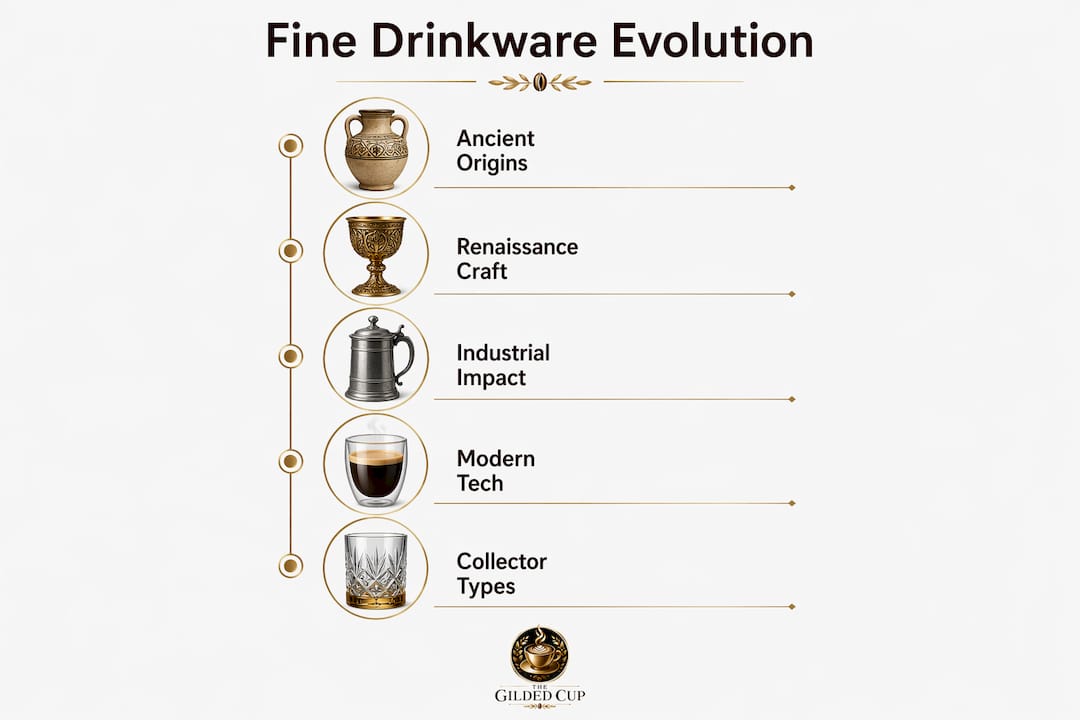
How did fine drinkware evolve from ancient times to the Renaissance?
Glassmaking for drinking vessels originated around 1,500 BCE in Egypt and Mesopotamia, where artisans shaped molten silica around clay cores to produce small, precious containers. These were not everyday objects. They were ceremonial goods reserved for royalty and temple ritual, which is exactly why so many survived intact in burial sites. Grain-based brewing predates even these vessels by thousands of years, confirming that humans were engineering dedicated containers for fermented beverages long before written history formalized the practice.
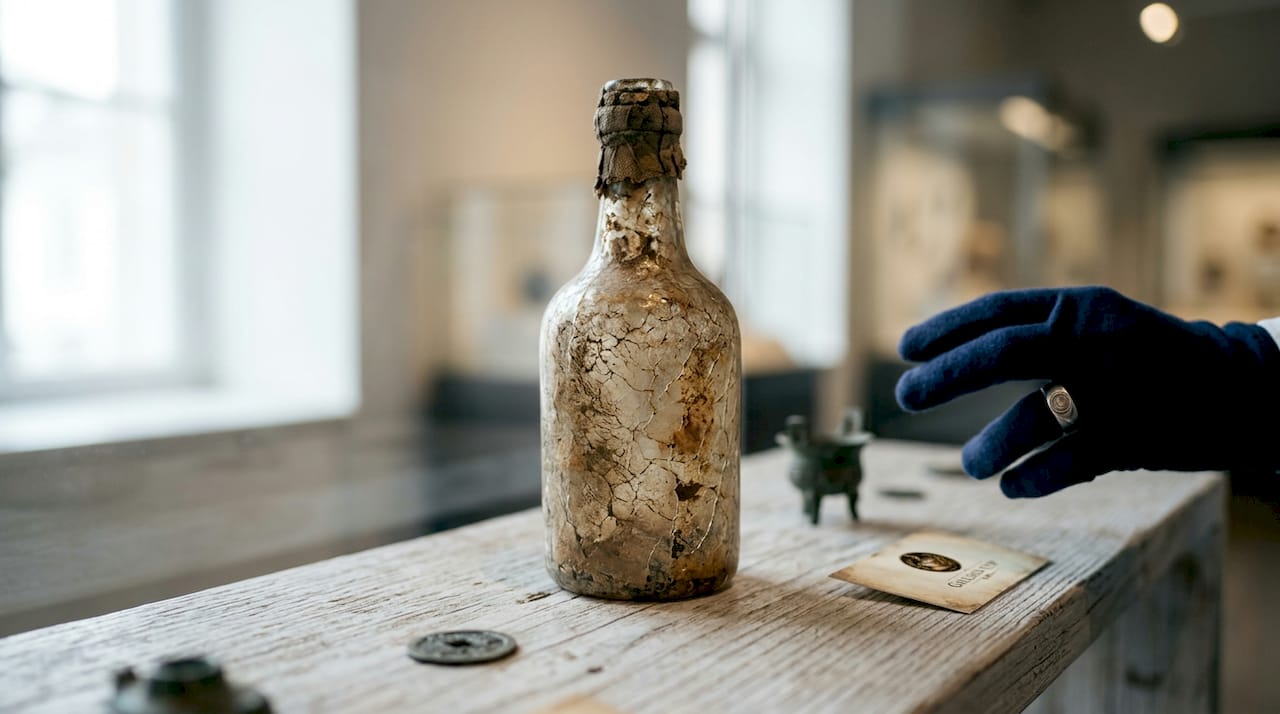
A 2026 archaeological report revealed a 2,300-year-old Chinese beer bottle sealed with fabric and mud to preserve its grain-based contents. This find, linked to the Zhou dynasty period, demonstrates that elegant beverage vessels were a cross-cultural priority across Asia as well as the Mediterranean world. The care taken to seal and store that bottle tells us something profound: people understood that the container was part of the experience.
Roman glassblowers changed everything around the 1st century BCE. The invention of the blowpipe allowed craftsmen to produce thinner, clearer, and more varied vessel shapes at a fraction of the previous labor cost. Roman glass spread across the empire from Britain to Syria, and for the first time, fine drinkware entered the homes of merchants and military officers, not just emperors.
The fall of Rome disrupted glassmaking networks across Western Europe, but Byzantine and Islamic craftsmen preserved and refined the techniques. Islamic glassmakers in particular advanced enameling and gilding, producing vessels of extraordinary visual complexity. Their work directly influenced the Venetian tradition that would define luxury drinkware for centuries.
- Murano, Venice (post-1291): The Venetian Republic relocated its glassmakers to the island of Murano to reduce fire risk in the city. This concentration of talent accelerated innovation. By the 15th century, Murano craftsmen had developed cristallo, an almost colorless glass of unprecedented clarity.
- The stemmed glass: Stemmed glasses evolved from practical needs for temperature control and hygiene, allowing drinkers to hold a vessel without warming its contents. By the Renaissance, the stem had become a canvas for decorative virtuosity.
- English lead crystal (1674): George Ravenscroft introduced lead oxide into the glass formula, producing a material that was brighter, heavier, and cuttable into facets that caught candlelight. This single innovation shifted fine drinkware from Venetian dominance to English supremacy for the next two centuries.
Pro Tip: When examining antique stemware, hold it to a light source. Lead crystal refracts light with a distinctive prismatic warmth. Modern lead-free glass produces a cooler, flatter reflection. This simple test is your first authentication step before any formal appraisal.
What impact did the Industrial Revolution have on fine drinkware?
The Industrial Revolution introduced pressed glass manufacturing in the 1820s, and the consequences for the evolution of drinkware were permanent. Molten glass was forced into iron molds under mechanical pressure, producing consistent shapes at volumes that hand-blowing could never match. What had been a luxury reserved for aristocratic tables became a standard household commodity within a generation.
The social implications were significant. Middle-class families could now own patterned glassware that visually echoed the cut crystal of their wealthier neighbors. The democratization was real, but so was the trade-off. Pressed glass lacked the optical clarity and resonance of hand-blown crystal, and the market quickly split into two distinct tiers that still define the collector landscape today.
| Feature | Hand-crafted lead crystal | Depression glass |
|---|---|---|
| Production method | Mouth-blown, hand-cut | Machine pressed in iron molds |
| Era of peak production | 17th to early 20th century | 1920s to 1940s |
| Typical collector value | High, especially signed pieces | Moderate, driven by pattern rarity |
| Identifying marks | Pontil marks, optical clarity | Mold seams, characteristic bubbles |
| Cultural significance | Aristocratic luxury | Working-class resilience |
Depression glass, produced during the 1920s through 1940s, occupies a unique position in the traditional glassware history. Companies distributed it as a purchase incentive during the Great Depression, tucking pieces into flour sacks or giving them away at movie theaters. Families assembled full sets piece by piece over months. The result is a category of drinkware that carries genuine emotional and social history inside every mold seam.
Depression glass collectors value original manufacturing imperfections such as bubbles and mold lines as authentic markers of period production. This is a counterintuitive truth that separates serious collectors from casual buyers. The flaw is the proof. A perfectly smooth surface on a purported Depression glass piece is actually a red flag, not a selling point.
Pro Tip: Focus your Depression glass search on less common colors like tangerine or ice blue rather than the ubiquitous pink and green. Rarer colors command significantly higher prices and are less likely to be reproductions.
How has modern technology shaped contemporary fine drinkware?
The definition of “fine” in drinkware has shifted decisively in the 21st century. Material luxury no longer drives the category alone. Today, consumer definitions of luxury have shifted toward brand engineering and lifestyle performance factors including insulation, durability, and ergonomic design.
Here is how that shift unfolded in practice:
- Lead-free crystal formulas replaced traditional lead oxide glass across most of Europe and North America following health research in the 1990s. Brands like Riedel and Waterford reformulated their flagship lines without sacrificing optical quality, proving that the material innovation cycle never stopped.
- Borosilicate glass moved from laboratory equipment into premium consumer drinkware. Its thermal resistance and chemical neutrality made it the preferred material for specialty coffee and tea vessels, where flavor purity matters as much as aesthetics.
- EU BPA restrictions accelerated a shift toward reusable drinkware made from stainless steel and BPA-free plastics. Regulation, not trend, drove this transition. The market responded with products that combined functional performance with premium design language.
- Brands like Yeti and Stanley built billion-dollar businesses by emphasizing ergonomic designs and performance over decorative tradition. Their products are collectible not because of historical craftsmanship but because of limited editions, colorways, and social identity signaling.
- Social media transformed drinkware into a visible status object. Drinkware became a style statement through Instagram and TikTok, where the vessel is as photographed as its contents. This has created entirely new collector communities organized around aesthetics and brand loyalty rather than historical provenance.
60% of U.S. adults now prefer reusable drinkware like stainless steel, driven by environmental concerns and social media influence. That figure represents a structural market shift, not a passing preference. The artisanal drinkware craftsmanship tradition has not disappeared. It has simply been joined by a parallel performance-driven category that competes for the same shelf space and the same collector attention.
What are the key collectible types valued by drinkware collectors today?
Collectors working across the history of fine drinkware typically organize their focus around four major categories, each with distinct authentication challenges and value drivers.
Venetian and Murano crystal remains the prestige category for serious collectors. Authentic Murano pieces carry a certification mark from the Consorzio Promovetro Murano, though pre-20th century pieces require provenance documentation and expert appraisal. The visual hallmarks include extreme thinness of the glass wall, complex internal color work, and the absence of mold seams.
English lead crystal from makers like Thomas Webb, Stuart Crystal, and the original Waterford factory (pre-1851 closure) commands strong auction prices. The weight and refractive quality of genuine lead crystal is distinctive, but chemical composition analysis remains the gold standard for confirming provenance when visual inspection is inconclusive. A 2026 study on medieval Scottish glass beads demonstrated that artifacts can be later imports despite their archaeological context, a lesson directly applicable to drinkware collecting.
Depression glass is the most accessible entry point for new collectors. The key reference texts are Gene Florence’s Collector’s Encyclopedia of Depression Glass and the annual price guides published by the Glass Collectors Digest. Pattern identification is the core skill. The Adam pattern in pink, the American Sweetheart in monax, and the Cameo pattern in green are among the most sought-after.
Fine china and ceramics represent a parallel tradition in elegant beverage vessels. Meissen porcelain, produced in Saxony from 1710, was Europe’s first hard-paste porcelain and remains a benchmark for fine china origins in the Western tradition. Chinese export porcelain from the Ming and Qing dynasties predates Meissen by centuries and presents its own authentication complexity.
- Examine pontil marks on the base of blown glass pieces. A rough pontil scar indicates hand production. A smooth or absent mark suggests later machine finishing.
- Check for glass authenticity markers including consistent wall thickness in hand-blown pieces. Machine-pressed glass shows uniform thickness throughout.
- Research maker’s marks systematically. The Waterford harp mark, the Baccarat paper label, and the Lalique signature each have documented variations across different production periods.
- Consult specialist auction records at Christie’s, Bonhams, and Rago Arts for comparable sales data before purchasing high-value pieces.
Pro Tip: Never clean antique glassware with dishwasher detergent. The alkaline chemistry permanently etches the surface, destroying both the optical quality and the collector value. Hand-wash with lukewarm water and a small amount of white vinegar to remove mineral deposits without damage.
Key takeaways
The history of fine drinkware is a direct record of human technological ambition, cultural ritual, and shifting definitions of luxury across 3,500 years.
| Point | Details |
|---|---|
| Ancient origins matter | Glassmaking began around 1,500 BCE in Egypt and Mesopotamia, establishing drinkware as a cultural artifact from the start. |
| Venetian and English innovation defined luxury | Murano cristallo and George Ravenscroft’s 1674 lead crystal set the technical and aesthetic standards that collectors still use today. |
| Industrialization split the market | Pressed glass democratized drinkware while creating a permanent two-tier collector market between hand-crafted and machine-made pieces. |
| Authentication requires chemistry | Visual inspection alone is insufficient. Chemical analysis and provenance documentation are the reliable standards for dating and verifying fine pieces. |
| Modern luxury is performance-driven | Consumer priorities have shifted from decorative materials to functional design, with social media accelerating drinkware as a collectible identity object. |
Why fine drinkware deserves more than admiration
I have spent years handling pieces that most people walk past at estate sales without a second glance. A Depression glass pitcher in tangerine. A Georgian rummer with a hand-engraved hunting scene. A Murano filigrana goblet so thin you can read through the bowl. Each one carries a specific conversation about the world that made it.
What I find most collectors underestimate is the technical literacy required to truly appreciate these objects. Knowing that George Ravenscroft’s lead crystal formula was a response to Venetian trade dominance changes how you look at a cut glass decanter. Knowing that a Depression glass manufacturer gave away pink sherbet dishes to families who could barely afford groceries changes how you value a chip on the rim. The imperfection becomes the story.
The current moment is genuinely interesting for collectors. The performance drinkware category has introduced a new generation of buyers who care about objects deeply, even if their reference points are Stanley tumblers rather than Waterford goblets. That enthusiasm is convertible. I have watched people who started collecting limited-edition Yeti colorways develop a serious interest in mid-century Scandinavian glass within two years. The sensibility transfers.
My honest advice: resist the instinct to specialize too early. The collectors I respect most hold Depression glass and Murano crystal in the same cabinet without apology. The history of drinkware through the ages is not a hierarchy. It is a conversation between eras, and the most interesting collections are the ones that let those eras talk to each other.
— Sharbel
Discover curated fine drinkware at Thegildedcup
Thegildedcup brings together artisan-crafted pieces and modern collectible designs in a single curated space built for collectors and enthusiasts who take drinkware seriously.
Whether you are drawn to the geometric precision of contemporary crystal or the organic character of hand-thrown ceramics, the collection reflects the same values that have defined fine drinkware across centuries: material integrity, deliberate design, and cultural meaning. The bespoke collaborations at Thegildedcup pair heritage craft traditions with contemporary aesthetics, producing pieces that belong in both a collector’s cabinet and an active home bar. Explore the full range and find pieces that carry their own history forward.
FAQ
What is the oldest known fine drinkware in history?
Glassmaking for drinking vessels originated around 1,500 BCE in Egypt and Mesopotamia, making core-formed Egyptian glass among the oldest confirmed fine drinkware. Grain-based brewing vessels predate even these by thousands of years, though they were typically ceramic rather than glass.
How do I tell authentic Depression glass from a reproduction?
Original Depression glass shows manufacturing imperfections including mold seams, small bubbles, and uneven thickness because it was machine-pressed without fire-polishing. Reproductions typically have smoother surfaces and more uniform walls, which are actually signs of later production rather than quality.
What makes Murano glass valuable to collectors?
Murano glass derives its value from centuries of concentrated craft expertise, the technical difficulty of its production methods including filigrana and millefiori techniques, and the certification system that distinguishes authentic island-made pieces from imitations. Provenance documentation significantly increases value for pre-20th century examples.
How does chemical analysis help authenticate antique drinkware?
Chemical composition analysis identifies the specific mineral ratios in glass, which correspond to known regional and period formulas. This method can confirm or contradict visual dating, particularly for pieces that may be later imports or reproductions placed in misleading contexts.
Why has the definition of fine drinkware changed in recent decades?
Consumer priorities have shifted from decorative materials toward functional performance and lifestyle identity, with brands like Yeti and Stanley redefining luxury through insulation and durability rather than optical clarity or hand-craftsmanship. Social media accelerated this shift by making the vessel itself a visible element of personal style.