

Discover the finest types of decanters for home bars
The right decanter does something most barware cannot: it earns a second glance before a single drop is poured. Whether you are building a home bar that impresses on sight or searching for a gift that tells someone you truly understand refined taste, the decanter you choose carries real weight. It shapes how spirits breathe, how wine opens up, and how your entire bar setup reads to guests. This guide walks you through the main types of decanters, what makes each one worth owning, and how to match the right piece to your purpose, your palate, and your lifestyle.
Table of Contents
- How to evaluate decanters: Key criteria for luxury selection
- Wine decanters: Forms that enhance both function and beauty
- Whiskey decanters: Showcasing spirits with style and substance
- Crystal vs glass decanters: Which material fits your bar and lifestyle?
- Decanter recommendations by occasion: Gifts, home bars, and collections
- Why the best decanter is less about price and more about purpose
- Elevate your barware: Shop curated decanter companions
- Frequently asked questions
Key Takeaways
| Point | Details |
|---|---|
| Material matters | Crystal and glass each offer unique benefits for display or regular use. |
| Shape enhances function | Decanter shapes like wide-base or globe suit specific types of wine or spirits. |
| Seal quality is essential | Airtight decanters keep spirits fresh and prevent evaporation. |
| Occasion guides selection | Match the decanter to the intended use, whether for display, gifting, or tasting. |
How to evaluate decanters: Key criteria for luxury selection
Not every beautiful decanter is the right decanter. Before you fall for a shape or a price point, it helps to know what actually separates a well-designed piece from one that just looks the part.
The first thing to consider is material. Crystal is prestigious for display, while glass is safer and often more practical for everyday use. Crystal catches light brilliantly and carries a sense of occasion, but it typically requires hand-washing and may contain lead in older or lower-quality versions. Borosilicate glass, by contrast, is lead-free, dishwasher-safe in many cases, and increasingly used in modern, design-forward pieces.
Next, think about function. Wine decanters are built to aerate, exposing the liquid to oxygen so tannins soften and aromas open. Whiskey decanters serve a different purpose: they preserve. A whiskey decanter is more about presentation and storage than transformation. That distinction matters when you are buying for a specific spirit.
Key criteria to evaluate before purchasing:
- Seal quality: An airtight stopper is non-negotiable for spirits. Poor seals allow evaporation and flavor loss over time.
- Base width: Wider bases increase the surface area exposed to air, which matters for wine but is less critical for whiskey.
- Neck design: A narrow neck slows pouring and reduces splashing, which is important for aged spirits.
- Weight and balance: A heavy decanter feels luxurious but should still pour comfortably.
- Clarity: High-clarity glass or crystal shows off the color of your spirit, which is part of the experience.
Pro Tip: For high-proof spirits, always choose a decanter with a ground-glass or rubber-sealed stopper to prevent evaporation, especially if you plan to display it for weeks at a time.
One detail that surprises many buyers is the over-aeration risk for delicate wines like Pinot Noir. Leaving a light-bodied red in a wide decanter too long can strip its subtle aromatics rather than enhance them. For those wines, a narrower decanter or a shorter aeration window is the smarter move. Pairing your decanter with quality spirits, like a whiskey barrel aged expression, only amplifies the experience.
Wine decanters: Forms that enhance both function and beauty
Wine decanters are where design gets genuinely theatrical. The shape is not just aesthetic; it determines how much oxygen reaches the wine and how easy the piece is to handle, clean, and display.
Wide-base decanters are the workhorses of the category. Their broad, flat bottoms maximize the surface area of the wine exposed to air, making them ideal for bold reds like Cabernet Sauvignon or Syrah. The Riedel Ultra Magnum wide-base is a benchmark in this category, combining serious aeration with a sculptural silhouette.
Swan-shaped decanters are the showstoppers. Standing around 60 cm tall, they pour elegantly and aerate well, but their real value is visual drama. They suit dinner parties where the decanter itself is part of the table’s story.
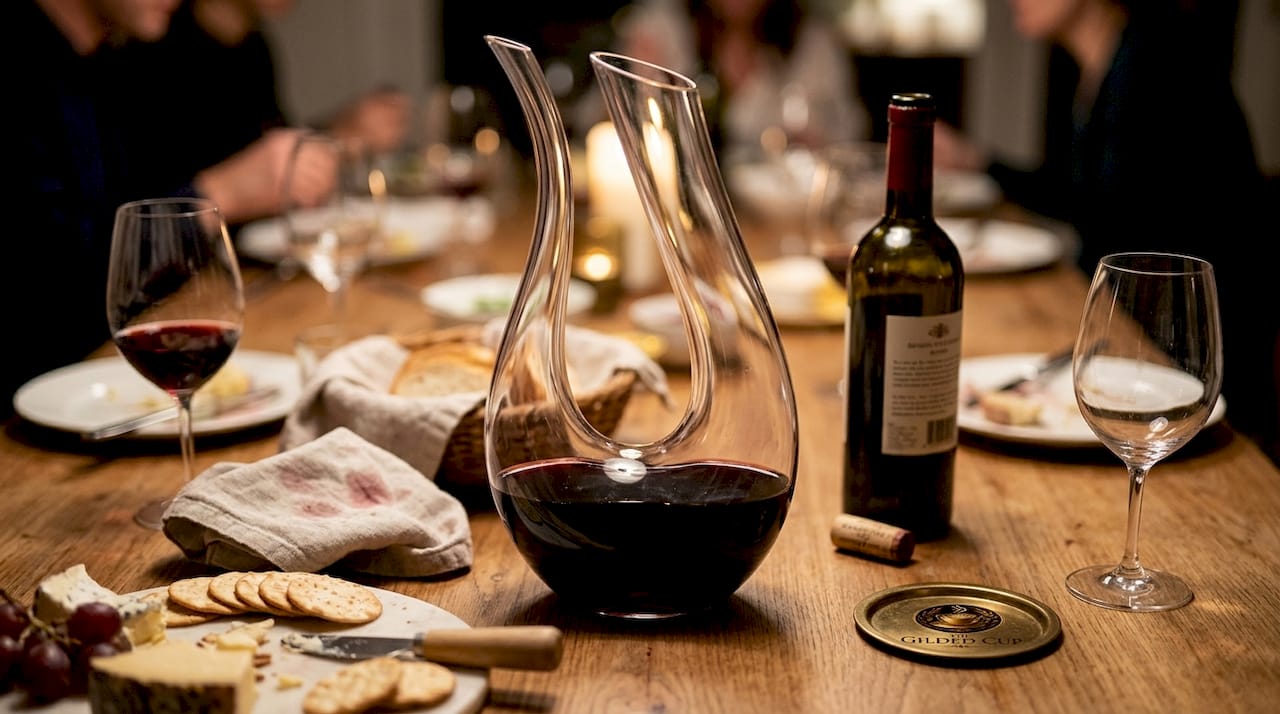
U-shaped decanters offer a practical middle ground. They are easy to grip, relatively simple to clean, and still provide solid aeration. If you want a wine decanter for regular use without sacrificing style, this shape delivers.
Ship-shaped decanters have a wide, flat profile and a low center of gravity. Originally designed for stability at sea, they work beautifully on a sideboard or bar cart, and they transition well between wine and spirits.
| Decanter shape | Best for | Aeration level | Ease of cleaning |
|---|---|---|---|
| Wide-base | Bold reds | High | Moderate |
| Swan-shaped | Display and dinner parties | High | Difficult |
| U-shaped | Everyday use | Medium-high | Easy |
| Ship-shaped | Mixed use, display | Medium | Easy |
“For aerating bold reds or creating a visual centerpiece at the table, a wide-base or swan-shaped decanter is the most impactful choice you can make.”
Choosing the right wine decanter comes down to how you entertain. If your dinners are formal and theatrical, the swan earns its place. If you pour wine most evenings and want something that works without fuss, the U-shaped design is your answer.
Whiskey decanters: Showcasing spirits with style and substance
Whiskey decanters operate on a different philosophy. Where wine decanters breathe, whiskey decanters seal. The goal is preservation, presentation, and the quiet confidence of a well-stocked bar.
Square and rectangular decanters are the classics. Their flat sides make them stable on any surface, and they lend themselves beautifully to engraving or etching, which makes them a popular choice for personalized gifts. The clean geometry reads as both modern and timeless.
Round or globe decanters are the most visually striking option in the whiskey category. The spherical shape shows off the amber color of aged spirits from every angle, making them a natural focal point on any bar. They are especially well-suited to gifting because of their immediate visual impact.
Ship’s decanters bring a sense of history and gravitas. With their wide base and low center of gravity, they were originally designed to stay upright on rolling ships. Today, they sit beautifully on bar carts and communicate a certain classic sophistication.
Key features to look for in a whiskey decanter:
- Airtight seal: Essential for preserving flavor and aroma over weeks of display
- Volume: 24 to 32 oz capacity covers most standard bottles and fits comfortably on a home bar
- Stopper type: Ground-glass stoppers offer the best seal; cork is charming but less reliable long-term
- Base stability: Especially important if the decanter will be moved or poured from regularly
Pro Tip: If you are displaying an aged or particularly valuable whiskey, invest in a decanter with a verified airtight closure. Even a small gap in the seal can lead to noticeable flavor loss within a few weeks.
A well-chosen whiskey decanter, especially one paired with a quality whiskey barrel aged spirit, becomes more than a vessel. It becomes a conversation piece that signals taste and intention.
Crystal vs glass decanters: Which material fits your bar and lifestyle?
The material question is one that divides collectors and casual buyers alike. Both crystal and glass have genuine merits, and the right choice depends on how you plan to use and display your decanter.
Crystal carries prestige. It refracts light in a way that standard glass cannot, giving it that signature sparkle. It also tends to be heavier, which contributes to a sense of quality when you hold it. The downside is that crystal requires careful handling, typically hand-washing only, and older crystal may contain lead oxide, which is worth checking before storing spirits long-term.
Glass has closed the gap significantly in recent years. High-quality borosilicate glass is lead-free, more resistant to thermal shock, and often designed with sharper, more contemporary lines. For buyers who prioritize safety and ease of care, glass is a completely legitimate luxury choice.
| Feature | Crystal | Glass | |—|—|—|—| | Prestige | Very high | Moderate to high | | Safety | Check for lead | Lead-free | | Durability | Fragile | More resilient | | Care | Hand-wash only | Often dishwasher-safe | | Cost | Higher | Moderate to high |
Consider your context. For a gift or a statement display piece, crystal is hard to beat. For a decanter you will use several times a week and clean regularly, a well-crafted glass option is the smarter long-term investment.
Decanter recommendations by occasion: Gifts, home bars, and collections
Matching the right decanter to the right moment makes all the difference. Here are four scenarios worth considering:
- Best gift decanter: A round globe decanter in lead-free crystal with a tight-fitting stopper. Visually impressive and personal.
- Ultimate showpiece: A swan-shaped wine decanter for the host who entertains formally and wants drama on the table.
- Top everyday option: A U-shaped glass decanter that aerates well, cleans easily, and holds up to frequent use.
- Best stable design: A ship-shaped decanter for bar carts or homes where the piece will be moved or poured from often.
Pro Tip: For gifting, consider a decanter with space for engraving or one that comes in a presentation box. The spirits seal quality matters as much as the look, especially if the recipient plans to store a prized bottle.
Why the best decanter is less about price and more about purpose
Here is something the luxury market does not always say out loud: the most impressive bar setups we have ever seen were not built around the most expensive pieces. They were built around the most considered ones.
A $400 crystal decanter sitting on a bar next to the wrong glassware tells a story of spending. A $180 hand-blown glass decanter chosen specifically for the whiskey it holds, displayed alongside a matched set of tumblers and a few well-chosen accessories, tells a story of expertise. Guests notice the difference, even if they cannot name it.
The real flex in luxury barware is knowing why you chose each piece. Rotating decanters based on what you are serving, using a wide-base for a bold Barolo and switching to a sealed square decanter for a peated Scotch, signals genuine knowledge. It shows your bar is a living, curated space rather than a showroom.
Curation always beats accumulation. One exceptional decanter used intentionally will always outperform a shelf of impressive-looking pieces that serve no clear purpose.
Elevate your barware: Shop curated decanter companions
If this guide has inspired you to think more carefully about what sits on your bar or what you give as a gift, you are already thinking like a true collector.
At The Gilded Cup, we curate barware and drinkware for people who care about the full picture. Pair your decanter with a whiskey barrel aged expression for a complete gifting experience, or explore our enamel mug collection for a beautifully crafted everyday companion. Our tea collection rounds out any luxury bar or gift set with elegance and intention. Every piece we carry is chosen to complement the others, because a great bar is always greater than the sum of its parts.
Frequently asked questions
What types of decanters are best for red wines?
Wide-base or swan-shaped decanters are ideal for bold reds, as they maximize aeration and enhance flavor development before serving.
Is a crystal or glass decanter better for whiskey?
Crystal offers prestige for display, while glass is safer and easier to maintain for everyday use, making it the smarter choice for frequent pours.
How long can I keep spirits in a decanter?
If your decanter has an airtight seal, whiskey and other spirits can be stored for several weeks without meaningful loss of quality or aroma.
Why is aeration important for wine but not for whiskey?
Wine needs oxygen exposure to unlock its full flavor profile, while whiskey requires a quality seal to prevent evaporation and preserve its carefully developed aroma.