

Defining Heritage Glass Brands: A Collector's Guide
Heritage glass brands are defined by three non-negotiable criteria: authenticated geographic origin, a documented production lineage, and legally recognized craftsmanship markings that distinguish them from mass-produced or stylistically imitative alternatives. The term “heritage glass brand” is widely used by collectors and retailers, but the recognized industry standard is provenance-authenticated glassware, a designation that carries legal and institutional weight. Understanding this distinction matters because the market is full of products that perform heritage visually without meeting the underlying criteria. This guide covers the full heritage glass brands overview, from the core definition to practical identification strategies, with named examples from Murano, Bohemia, and the American Midwest.
What criteria define heritage glass brands?
Heritage glass brands are authenticated through five overlapping criteria that collectors and curators apply consistently across European, American, and Asian traditions. These are not subjective preferences. They are the documented standards that separate a genuine Heisey tumbler from a Depression-era lookalike.
The first criterion is origin narrative. A heritage brand must be traceable to a specific place, founder, or production community. Murano glass, for instance, carries its origin story back to 1291, when the Venetian government relocated all glassblowing furnaces to Murano Island to protect trade secrets and reduce fire risk on the mainland. That forced relocation created a concentrated, documented production community whose techniques, including cristallo and mirror-making, became legally protected heritage.
The second criterion is manufacturing lineage. A. H. Heisey & Company, founded in Newark, Ohio in 1896, exemplifies this standard. The factory grew into one of America’s most recognized pressed glass producers, and Heisey’s Diamond H mark was applied to pieces starting between 1900 and 1909, giving collectors a precise authentication anchor. The Heisey Glass Museum now holds over 6,000 pieces and related archival materials.
The third criterion is distinctive craftsmanship. Heritage brands use techniques that require years of training and cannot be replicated by automated production. Bohemian glass, produced in Czech regions, built its international reputation on high-quality cut glass and 19th-century patented innovations that remain reference points in the industry today.
The fourth and fifth criteria are trademark use and regulatory compliance. The EU differentiates crystal types by lead content, and terms like “lead crystal” and “crystal” carry specific legal definitions. Authentic provenance markings like the Promovetro label are not optional branding choices. They are legally backed certifications.
- Verified geographic origin tied to a specific location or founding community
- Documented factory or workshop history spanning multiple decades
- Craftsmanship techniques that are distinct, teachable, and traceable
- Registered trademarks or origin marks with legal backing
- Regulatory compliance with national or regional labeling standards
Pro Tip: When researching a brand’s lineage, look for factory records, museum holdings, or trade catalogs from the brand’s founding era. These materials confirm manufacturing continuity in ways that marketing copy cannot.
How do provenance and legal certifications authenticate heritage glass?
Provenance and legal certification are the backbone of heritage glass authentication. Without them, a beautiful piece of handblown glass is simply an art object. With them, it becomes a verifiable artifact of a specific cultural and industrial tradition.
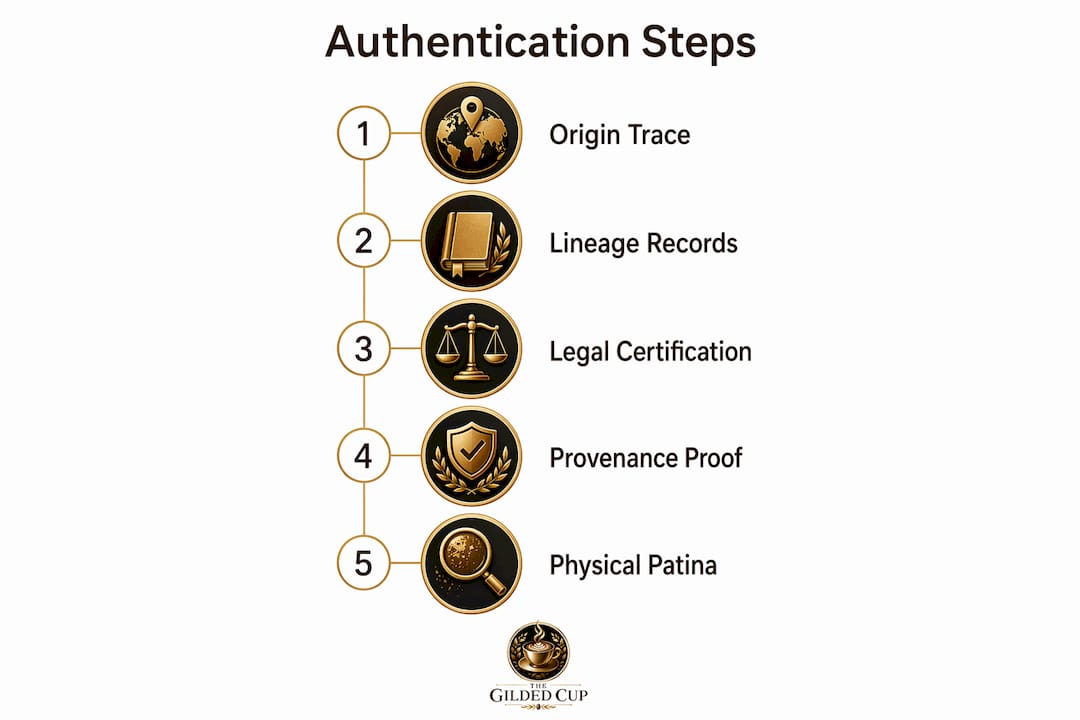
The most rigorous example of this system is the Vetro Artistico® Murano trademark, managed by Promovetro, a glass consortium with government backing since 1985. The formal legal framework was established by Veneto Region Law No. 70 in 1994, which confirmed the trademark’s authority and defined the conditions under which it can be applied. Only glass made on Murano Island using traditional techniques qualifies. This means the label is a legal statement, not a marketing claim.
Here is how the certification hierarchy works in practice:
- The manufacturer applies to Promovetro and submits to production verification.
- Approved pieces receive the Vetro Artistico® Murano sticker, which includes a hologram and serial number.
- The certification is tied to the specific furnace and artisan, creating a traceable chain of custody.
- Retailers selling certified pieces can provide documentation linking the object to its production source.
- Buyers who receive a certificate of authenticity alongside the label have the strongest possible provenance case.
The EU’s crystal labeling regulations operate on a parallel track. Crystal glass is classified into four categories based on lead oxide content, and each category carries specific labeling requirements. This regulatory framework directly affects how heritage brands market their products and how collectors interpret labels.
“Objects that only ‘perform heritage’ are a growing concern in the luxury market. Real craftsmanship and provenance are what separate a collectible from a decoration.” — Architectural Digest
Fake or unofficial labeling is a real problem. Pieces sold as “Murano-style” or “Murano-inspired” carry no legal protection and no provenance value. The word “Murano” alone is not a trademark. Only the Vetro Artistico® Murano mark confirms authenticity. Collectors who skip this verification step are the primary buyers of imitation glass sold at premium prices.
What are the best heritage glass manufacturers and their contributions?
The best heritage glass manufacturers share a common trait: each built a distinct technical identity that became inseparable from its cultural context. The following examples represent the breadth of the heritage glass brands overview, spanning centuries and continents.
Murano glass is the most internationally recognized heritage glass tradition. The government-enforced relocation to Murano Island in 1291 created a closed production community that developed techniques unavailable anywhere else, including filigrana (threaded glass), sommerso (layered color), and millefiori (thousand flowers). The Promovetro certification system ensures these techniques remain tied to their geographic origin.
Bohemian glass from the Czech regions represents a different model of heritage. Rather than geographic isolation, Bohemian glassmakers built their reputation through technical innovation and export. Their cut glass and engraving techniques became the standard for European luxury tableware in the 18th and 19th centuries, and the term “Bohemian crystal” still carries strong market recognition globally.
A. H. Heisey & Company represents the American heritage glass tradition. The Newark, Ohio factory produced pressed and blown glass from 1896 until its closure in 1957. The Diamond H trademark is the primary authentication tool for collectors, but provenance research must go deeper. Some Heisey pieces were decorated by third-party specialists, meaning the factory mark confirms origin but not the full production story.
Edo Kiriko glass from Japan represents a more recent but equally rigorous heritage tradition. Originating in Edo-period Tokyo, Kiriko glassware is defined by its precise geometric cutting patterns applied to layered colored glass. The technique requires years of apprenticeship and produces patterns that are immediately recognizable to trained collectors.
| Brand | Origin | Key Technique | Authentication Mark |
|---|---|---|---|
| Murano glass | Murano Island, Italy | Filigrana, sommerso, millefiori | Vetro Artistico® Murano label |
| Bohemian glass | Czech regions | Cut glass, engraving, patented innovations | Regional and brand-specific marks |
| A. H. Heisey & Company | Newark, Ohio, USA | Pressed and blown glass | Diamond H trademark (1900–1957) |
| Edo Kiriko | Tokyo, Japan | Geometric cutting on layered color glass | Artisan certification, regional designation |
Pro Tip: Collecting heritage glass across multiple traditions gives you a comparative eye that single-category collectors lack. A collector who knows both Heisey and Murano can spot inconsistencies in provenance claims that specialists in only one tradition might miss.
How can collectors identify genuine heritage glass brands?
Identifying genuine heritage glass brands requires a systematic approach, not just a good eye. The market contains a significant volume of heritage-inspired products that use period aesthetics without meeting any of the criteria that define authentic heritage glass. Architectural Digest notes that consumers increasingly encounter objects designed to perform heritage superficially, making verification skills non-negotiable for serious collectors.
Start with the physical object. Genuine heritage pieces carry specific marks, labels, or signatures that are documented in reference materials. The Heisey Diamond H, the Vetro Artistico® Murano sticker, and Bohemian brand-specific engravings are all verifiable against published catalogs and museum records. If a piece lacks any marking, that absence is itself a data point requiring explanation.
- Look for legally backed origin marks, not generic descriptors like “handmade” or “artisan”
- Cross-reference trademarks against museum databases, collector societies, and brand-specific registries
- Request certificates of authenticity for any significant purchase, particularly for Murano and Bohemian pieces
- Be skeptical of pricing that seems low for the claimed heritage. Genuine Murano pieces carry costs that reflect the certification process and artisan labor
- Research whether decorative elements were applied by the primary manufacturer or a third party, as this affects both provenance and value
Understanding glassware patina and aging is also part of the authentication process. Genuine heritage pieces develop specific surface characteristics over time that are difficult to replicate artificially. Reputable museums like the Heisey Glass Museum in Newark and the Museo del Vetro on Murano Island are the most reliable reference points for physical comparison.
Pro Tip: Before purchasing any piece described as heritage glass, search the specific brand name alongside “trademark history” and “museum collection.” If neither a trademark record nor a museum holding exists, the heritage claim is marketing, not documentation.
For collectors building a serious collection, the guidance on collecting rare glassware provides additional context on how provenance documentation directly affects long-term value.
Key takeaways
Defining heritage glass brands correctly requires verified origin, documented production history, and legally recognized marks. Aesthetic similarity to heritage pieces is not a substitute for any of these criteria.
| Point | Details |
|---|---|
| Origin is non-negotiable | Heritage glass brands must trace to a specific, documented location or founding community. |
| Trademarks are authentication tools | Marks like the Diamond H and Vetro Artistico® Murano are legally backed, not decorative. |
| Provenance goes beyond the factory | Third-party decoration, as seen with some Heisey pieces, complicates provenance and requires deeper research. |
| Legal certifications protect buyers | EU crystal labeling rules and regional laws like Veneto Region Law No. 70 give collectors a regulatory framework. |
| Imitation is the primary market risk | Products that perform heritage visually without documentation are the dominant threat to serious collectors. |
Why getting the definition right matters more than most collectors realize
I have spent years working with collectors who bought confidently and discovered later that their “Murano” piece was made in a Chinese factory. The loss is not just financial. It is the loss of the story they thought they owned.
The word “heritage” has been so thoroughly absorbed by marketing language that it now signals almost nothing on its own. What actually matters is the paper trail. A Murano piece with its Vetro Artistico® sticker, a serial number, and a certificate linking it to a specific furnace on the island is a different category of object from a handblown piece that looks identical but carries no documentation. Both may be beautiful. Only one is a heritage glass artifact.
The Heisey example teaches a subtler lesson. Even with a confirmed Diamond H mark, collectors must ask whether the cutting or decoration was done at the factory or by an outside specialist. That question changes the provenance story without invalidating the piece. It just means the story is more complex than the mark alone suggests.
My honest advice: treat every heritage claim as a hypothesis, not a conclusion. The collectors who build the most valuable and historically significant collections are the ones who verify first and buy second. Patience in this market is not caution. It is expertise.
— Sharbel
Explore authentic heritage glassware at Thegildedcup
Thegildedcup curates a selection of luxury and collectible glassware chosen specifically for provenance, craftsmanship, and cultural significance. Every piece in the collection reflects the criteria that define genuine heritage glass brands, from documented production origins to artisan techniques that mass manufacturing cannot replicate.
Whether you are building a serious collection or selecting a piece that will hold its meaning for generations, Thegildedcup provides the product detail, imagery, and context you need to buy with confidence. Explore the full range of heritage drinkware and collectibles and discover why provenance-authenticated glassware is the standard that serious collectors hold to. For collectors new to the field, the guide on vintage glassware fundamentals is the right starting point.
FAQ
What makes a glass brand a heritage brand?
A heritage glass brand is defined by authenticated geographic origin, a documented manufacturing lineage, and legally recognized craftsmanship marks. Generic terms like “handmade” or “artisan” do not qualify a brand as heritage without verified provenance.
How do I verify a Murano glass piece is authentic?
Look for the Vetro Artistico® Murano sticker, which includes a hologram and serial number managed by Promovetro under Veneto Region Law No. 70. A certificate of authenticity linking the piece to a specific furnace provides the strongest verification.
Is the Heisey Diamond H mark enough to authenticate a piece?
The Diamond H mark confirms the piece originated at the A. H. Heisey & Company factory in Newark, Ohio, but collectors should also research whether decorative cutting was applied by a third-party specialist, as this affects the full provenance story.
What is the difference between Bohemian crystal and Murano glass?
Bohemian crystal, produced in Czech regions, is defined by cut glass and engraving techniques developed over centuries of technical innovation. Murano glass is defined by its geographic origin on Murano Island and techniques like filigrana and sommerso that are tied to that specific production community.
How do I avoid buying imitation heritage glass?
Request official origin marks and certificates of authenticity, cross-reference trademarks against museum records, and be skeptical of prices that seem low for the claimed heritage. Products described as “Murano-style” or “heritage-inspired” carry no legal provenance and no collector value as authentic heritage pieces.